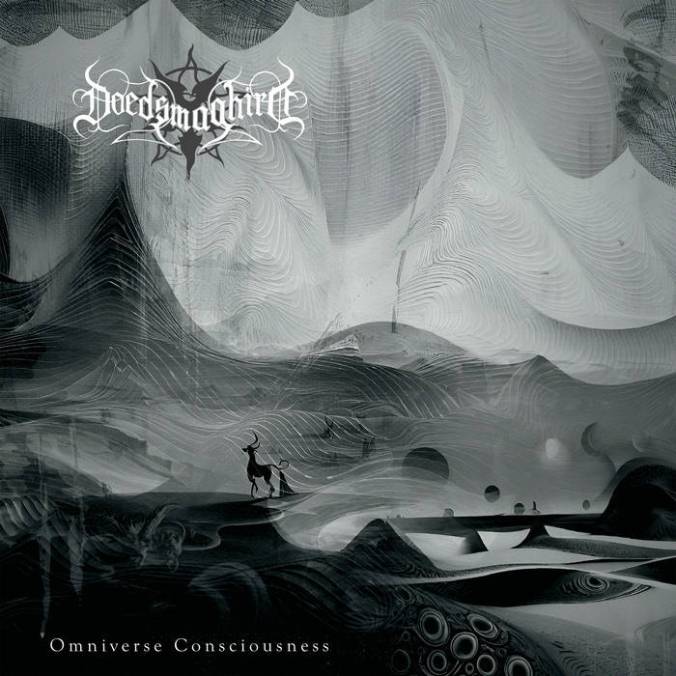
Yusaf “Vicotnik” Parvez still had much to say after Dødheimsgard’s ambitious Black Medium Current in 2023. Hence the release of Omniverse Consciousness, the chaotic counterpart to this monumental album, under the name Doedsmaghird—an anagram of Dødheimsgard—in 2024. Intrigued by these two related but dissimilar albums and their unique connection, I reached out to Yusaf to learn more. And after a couple of months and two missed opportunities, we had a long and insightful conversation about these recent releases and much more: using Omniverse Consciousness as a threshold, we stepped into the dark and colorful universe, full of harshness, beauty, and paradoxes he’s been creating for more than three decades, and Yusaf offered his thoughts on black metal, the nature of music, online controversies, and no less than the meaning of life.
This interview took place in December 2024 and was first published on Radio Metal.
Omniverse Consciousness was meant to be released closer to Black Medium Current. Why and when did you start working on this project? What was its purpose?
I started working on it while I was working on Black Medium Current. I don’t think we had recorded Black Medium Current when I started putting together the concepts and ideas for what would at last become Omniverse Consciousness. These two albums kind of mirror each other: I think that the fact that they were conceived and elaborated around the same time is a factor in that.
So when you were doing Black Medium Current, you were aware that you would need a mirror piece to go with it?
Yeah, and it mirrors it in many ways. I started Black Medium Current before Omniverse Consciousness, and somewhere in the midst of making it, I started doing the other album choosing the opposite method: Black Medium Current is very planned out, every detail is very well thought-through, and the compositions are very brainy in a sense, whereas on Omniverse Consciousness, it was more like, “Okay, what can I make just on the fly without overthinking, without doing a hundred takes on each instrument? Let’s just see what streams through that Omniverse Consciousness without putting my brain or intellect to the work—just unhindered.”
Consciousness versus subconsciousness?
Yeah, exactly.
It was intended to be a solo project. At what stage did Camille Giraudeau join in, and what was his input?
I started on my own, but then it was very much a matter of practical issues. I think Camille wanted me to join his band, basically—one of his many, many projects—and as always, I stalled. I always say yes; I have that shitty habit of saying yes to everything [chuckles], but then time takes me. So I guess Camille was waiting and waiting for my input, and at some point he just gave up and said, “Don’t you have something I can join in instead?” And I was currently working on this solo thing called Doedsmaghird, so I thought, “The concept that lies behind this project is, ‘Let’s see what happens.’ So let’s not think of the details too much, let’s not try to control them; let’s just add Camille and see what he brings to the table.” And obviously, he brought a lot: he reimagined the drums that I was picturing as a lot simpler, a lot less busy. He added a lot of liveliness, a kind of drumming that feels like it’s going to fall apart at any moment, and I think that really suits the songs. He also added a lot of synth layers, and he did the guitars on one song, “Endless Distance”. He also played the bass on a lot of the tracks. We just split the roles between us: he did the drums, I did the vocals, and for the rest, both of us did a little bit of everything.
How was it to work with him on that kind of project, compared to what he does as a guitar player playing your material live with Dødheimsgard?
Camille is very respectful. I think he understands that he comes into something that’s already there—there’s already thirty years of work in Dødheimsgard when he enters the picture—and he’s very humble and respectful towards it. He also has a lot of enthusiasm and unbridled energy. That helps me a lot, because I can kind of lose myself at times to the point of having to take a break from stuff, and then he has a good way of bringing me back in and getting me focused again.
Apparently, you thought of Omniverse Consciousness as something that could have been released between the Satanic Art EP and 666 International, a period where Dødheimsgard went through a huge transition. Why did you want to revisit that era?
I think this idea is more like a building block. I always say it might sound like this—the ‘might’ is important, because I can never say that I would have made an album like this back then, turning back the clock on so many years. I used the concept as something to build upon. I usually do that for albums: I take certain topics, expressions, and moods, and try to build music around that. The moods we create can be really tangible; that’s why certain melodies can make you cry, some can make you laugh, some can make you thoughtful. So I put the album together conceptually before I start making the music. When I say that Omniverse Consciousness could have been an album between Satanic Art and 666 [International], I’m just imagining a sphere in which I can put my labor. I also could have said something like, “What if Black Medium Current had been released between Satanic Art and 666?” That could’ve also worked conceptually. It gives you a lot of tools to approach what you want to achieve and what you want to make; on the one hand, it shows you the directions that are available, and on the other, it closes the door on where not to go.
As you said, Dødheimsgard is now thirty years old, and you also did other projects, so you have all this back catalog of work behind you, and yet you always find new things. Do you ever revisit your past work to reuse parts from it and push things forward?
I still have quite a few things from each decade, or even period of three or five years; I still have pieces and riffs left. You know, if I go twenty years back in time, I probably have thirty to fifty songs that are more or less finished but haven’t been released, and then when it comes to just themes and parts and stuff like that, I have hundreds. Since the very beginning, I’ve always put some riffs in the bank for later use, and I think maybe that’s how we get this coherence and sense that it’s all connected, even though we’re kind of traversing forward. It helps you do it both at once: first, you’re tethering the band, tying it to something that was there before, and then you’re moving forward in space that is uncharted.
Doedsmaghird is an anagram of Dødheimsgard. The artists Hans Bellmer and Unica Zürn, who worked a lot with anagrams, had the idea that by mixing up the letters of a word or the parts of a whole, you discover its inner core, some kind of deeper truth. Is it that kind of relation that binds these two projects?
I just wanted to tie this new album to Dødheimsgard so that it could feel more like an artistic project, to give it a purpose. And that purpose is like a linear time shift: movies, for instance, have present time, future time, and then prequels, and book series work like that as well; all these mediums work both collectively and independently from each other. I didn’t want people to think, “Oh, this is Yusaf’s new project and it sounds a bit like Dødheimsgard.” I wanted it to be understood as both Dødheimsgard and not Dødheimsgard, as the lining of a vision I have or a part of a larger body.

The sound of Omniverse Consciousness is chaotic and raw, especially compared to Black Medium Current. How is it to work with that kind of material and, as you said, to do things more spontaneously, without overthinking?
Everything I made on that album, I made then and there. I didn’t do many takes. A lot of the riffs you can hear on the album, I was playing them for the first time… Some others craved a bit more work, though. It was basically about channeling what comes easily to mind. By not doing many takes, I could also simulate where I was twenty years ago, when playing skills and technology were much more crude. So not doing a lot of reruns and not using the technology that is now available, only playing each riff once or twice so I couldn’t make sure that it was played with perfection… That also ties in with this idea of alternative past.
Was it difficult psychologically to let go of everything that you know and all the skills that you have accumulated?
Not really, because this is what I wanted to do. For the last few years, there’s been so much meticulous work on albums, and also being in the situation where you are five or six guys making an album, maybe even more if we add the engineer, the mastering guys, and so on… Keeping it in close quarters—Camille came in when at least the framework of every song was done—and without distractions made it quite easy to avoid having confusion within myself, or having to discuss with someone else who might be understanding the concept the wrong way, or overdoing or overworking it; all of these things that were unwanted.
Black Medium Current and Omniverse Consciousness are linked to the point that you mention a “black medium current” in your description of Omniverse Consciousness, and that, if I get you right, the black medium current is part of this omniverse consciousness…
Yes, I’m picturing that “black medium current” as some kind of conduit—a place in the universe that holds all these terrible emotions and experiences, all these dark thoughts and our inner lives, and acts like a conduit. This was what latched on to my consciousness. I drew a lot of experience from the time I wrote Black Medium Current in the sense that it was quite a dark and shitty period. But this is not literal, right? This is all figuratively speaking.
I noticed—or maybe made up—many links between the two albums, in the lyrics, for instance…
Yeah, there are. Funnily enough, I spent a long time writing Black Medium Current’s lyrics, and they’re quite simple, whereas I improvised all the lyrics of Omniverse Consciousness, and they ended up quite complicated. Even there, the working methods were completely the opposite. The results are similar in what they contain, but they are very different in how they are expressed.
Are you planning on doing more with Doedsmaghird?
I’m entertaining the possibility of going down those various roads again. With Dødheimsgard, I push forward, because it has the purpose of opening new spaces. Even though it’s not always all original material—as I said, it has this tethering to the past—it’s like a spaceship that knows where it comes from and travels through unknown territory. I would like to keep Doedsmaghird in its fold because with this project, I don’t have to focus on stuff like that. I can just take bits and pieces from where I’ve been and mash them together like a wild experiment in the big collider of the mind.
Do you think that having this project on the side had an impact on Black Medium Current’s definitive form in one way or another?
I think Black Medium Current lives its own life, whereas Omniverse Consciousness is totally codependent on Black Medium Current. So it kind of works one way, oddly enough.
Are you planning on playing live with Doedsmaghird?
Yeah, we’re having a show in Oslo on the 3rd of January [2025], right after the new year. Just playing the whole album from start to finish. That’s the plan.
Black Medium Current was released about a year and a half ago, to raving reviews. How do you feel about it, now that a bit of time has passed?
Reviews are one of those things that don’t matter if they’re bad and are very, very appreciated when people understand what you’re trying to do. And there are several very interesting observations when it comes to Black Medium Current. I think a lot of the reviews I read were smart, small artworks on their own. People really made an effort to express this album when they were writing—sometimes when I got the review, I would also read another one by the same author, and his writing would be completely different. It makes me even prouder of the fact that it’s a challenging piece of art: it also challenged the listener on how to verbally express his or her experience. For me, it’s been a good experience also in the sense that it’s the first time I had absolutely no care at all about whether we would get booked, or if people would like it… I just needed to make this album. It was also a huge shift in direction to go from the extroverted, slightly crazy, aggressive, expressionistic band that did A Umbra Omega, to an introverted and immersive album like Black Medium Current.
Dødheimsgard always changed through the years, so your audience is now used to expect the unexpected. It hasn’t always been the case, though; it’s been a bit shakier in the past. Is it a relief not to be met with this wall of hostility anymore, and to have people immediately embracing what you’re doing?
You know, I was also fine with people opposing it. I knew that this opposition existed, whether I was there or not, so one could say that it was part of the grander work that I wanted to do. I wanted to pressure this scene into making more diverse music, to open their eyes and their minds, basically. And I’m not saying that I have done that alone, but I certainly did my part to make the scene grow beyond the Darkthrone clones. That was the secondary work, or maybe the non-musical dimension of my work to create that space, to create that mind space in the universe where all of this was allowed, appreciated, and encouraged. And hopefully, some of the bands that are active today can have me somewhere in their mind as an encouragement in their decision to explore this space too, add to it, or expand it. I was always fine with people hating me, with everybody saying, “It’s shit,” or, “They wimped out,” or, “This is not black metal,” or some other police statement [chuckles]. I think that was part of the work.
There’s always been the same eight-year gap between Dødheimsgard’s albums since 666 International. Do you think it’s what it takes for the band to reinvent itself?
It’s really funny because I never planned any album to take eight years to make, but this has become something of a coincidence. Of course, I would have made more albums if I’d been staying on course, if that’d been my plan, but my plan was different, which meant that I would need to spend more time on albums. That it exactly became eight years between each release for a few releases now was never a conscious choice—either it wasn’t a conscious choice, or it’s buried so deep in my subconscious that I have no idea about it.
Your role in Dødheimsgard is unique: you’re the sole member who is featured on all the releases, but not always in the same spots. Do you think it gave you a particularly intimate knowledge of what Dødheimsgard is?
Yeah, I guess. I think it’s mostly coincidental, though, and based on how the other roles were moving in and out of the band. But then I’ve also been the songwriter since Satanic Art. I did write music for the first two albums as well, but it was more of a shared effort compared to Satanic Art and on. Because of this, to me, it never really mattered what I was doing in the band. At some point, I even considered not playing on an album, just writing it. I never really thought about where I should be. I think working behind the scenes of the band—on the music, the bookings, and the lyrics—plus working with every musician that’s ever been in the band on what they were playing and being in the studio with them, that’s what gives you the role, the freedom, and the deep insight into what the band is about.
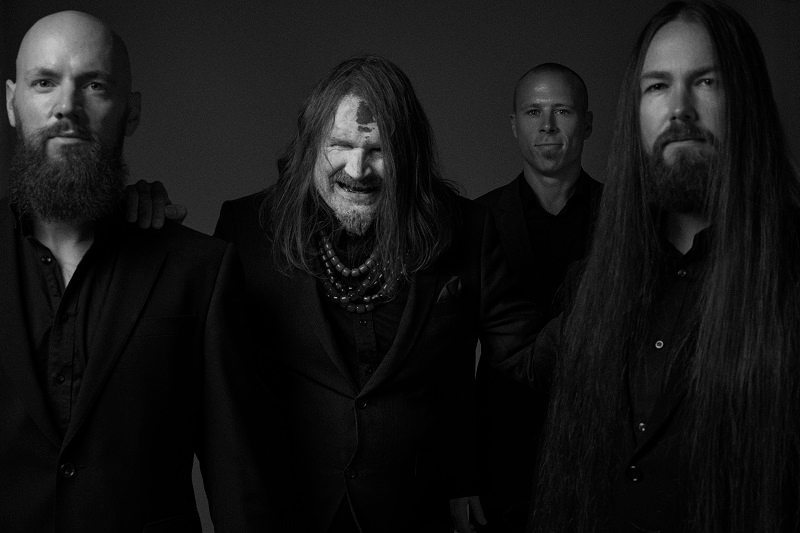
What can you say about the current lineup? What do they bring to the table?
They bring a lot. Something that has changed a bit since the beginning is that now, the people that I’ve been playing with for the last fifteen years respect the fact that they come into a hierarchy, whereas with the people you start out with, there’s no real hierarchy. There is just chaos, and everyone wants to embody the band, to be the man, I guess… Plus we were very young at that time [laughs]. I think that now, the lineup is the alpha and omega; it’s a structure, and everybody helps out. In the old days, everybody wanted to do the fun parts, but nobody really wanted to do the boring ones, like answering interviews—sorry [laughs]—, taking care of the bookings and the merch, talking to promoters, all these things that are costly in time and money. Now, people are more understanding of the fact that things have to be done. Lars [Måløy, bass] takes care of a lot of practical things for me, like organizing rehearsals. Jonas [Ulrik Eide, guitars] helps out a lot, giving all band members the information they need when we are going abroad to travel, for instance. We all pick out the setlist together. Lars also added the two piano tracks on the latest album, and hopefully he will write a lot more with me on the next one… Roles are getting defined as we go along. Tommy [Thunberg, guitars] helped me with the backdrops, the amp plugs, and everything. Everybody helps with the merch… It’s a team effort now, more than ever.
You are also in charge of the production, right?
Yeah, I produced everything since Satanic Art. According to me, there’s no reason to talk about a producer or production for the first two albums, because they were kind of plug-and-play, whereas from Satanic Art on, there was more of a cohesive idea. That’s why you need someone who can express them, whoever the engineer is—I wasn’t the engineer for Black Medium Current, but I was the engineer and did the mix for Omniverse Consciousness.
How is it to be in control of so much of the process?
It’s secure, in a sense, but then it’s also hell. It’s basically like taking on more work than you enjoy. But as I often say about making music and art: I love it, but I don’t always like it, you know? Even though there’s love and passion there, it can also be really stressful, tedious, and too time- and mind- consuming. It’s a two-way street.
Is it because Omniverse Consciousness is a bit rawer and not as streamlined as Black Medium Current that you could do everything yourself?
Yeah. I wanted the engineer for Black Medium Current to know more about gear and rooms than me, and I also needed to have somebody to work along with because I had spent so many years on this album already, and I didn’t want to put myself in a bad situation where I’d take too much upon myself in a period where I was basically already fed up. Whereas with Omniverse Consciousness, it was about, “Whatever you make, you accept.” So that meant the timeline of making the album was very different, plus it wasn’t an album that was about production. It was about capturing what was happening in the moment. Whatever happened in the moment, I accepted: in a way, it was done as soon as a note came out of the guitar.
The biggest change between A Umbra Omega and Black Medium Current was that Aldrahn left. You’re the sole singer for the first time, I think. How did you approach that? Your vocals are very diverse; it makes it sound like different characters, even though it’s still you. And the way clean and harsh vocals are layered sometimes makes it sound like two completely different parts of your personality are coming together…
I started as a vocalist—guitarist-vocalist—, and I’ve always been singing a bit here and there. I think that’s always been where I feel the most comfortable. But when we started Dødheimsgard, since I was the drummer, where it’s not really a natural vantage point to sing, and Bjørn [Gjerde]—Aldrahn—had such a great voice, it was natural to have him as the guitarist-vocalist. And I would sit back there and do some backing vocals. That happened naturally. So, yeah, I don’t know. Like I said, I’ve always been a vocalist, and even if I haven’t practiced every week or every month for the last thirty years, I’ve always been a vocalist at heart.
It’s natural for you to express yourself like that.
Yeah, I always felt like vocals are very interesting in the sense that they can make so many different sounds, and they’re also the bearer of the lyrics. It has that part to acknowledge, to take care of. It’s not only an accessory to the music, but it’s also the tool for the lyrics to come through. It exists in its own space, and I think that’s an interesting way to work. It gives you more, especially when you’re writing the songs as well—when you write the lyrics and do the vocals, it gives you some kind of dominance over the completeness of the expression.
To go back to what you said before about Black Medium Current feeling more introverted compared to A Umbra Omega that felt more extroverted: does it have something to do with the fact that you’re in charge of pretty much everything?
Yeah, I think I started that journey a bit on A Umbra Omega. There are some parts there that really resonated with me, emotionally; the song “Architect of Darkness” especially was the door that I went through to reach Black Medium Current. I knew as soon as I wrote it that it was the way forward for me, where I wanted to go. But I think A Umbra Omega also had more parts from the old Dødheimsgard. It was a bit of a schizophrenic period, and I really wanted to write honest music, music that was uncomplicated and unambiguous. So I needed that album, A Umbra Omega, to open certain parts and make that doorway to step through and reach Black Medium Current.
I’ve read in an interview that with Black Medium Current, for the first time, you wanted to do something more vulnerable and dark instead of the metaphors and posturing that black metal often relies on.
Definitely.
How come? Do you think that maybe you reached a point in your life where you’re confident enough to do that? Or is it just circumstances?
Well, yeah [chuckles], I’m almost fifty years old, so it’s about time! We’ve always been in a more psychological camp rather than in a mythological one, but I think Black Medium Current is less about playing a role, less pandering to what’s within normal black metal, and more simply an expression of the self and the vulnerability there. That’s what I wanted to express, because we go through all these changes in life and I find them so vulnerable and interesting… A lot of them are very dark. Our journey is basically, in short terms, building up everything we have and losing it. That’s our destiny as human beings. And that’s such an interesting mind space: we have all this love and care and passion and ambition and foresight and creativity; we have all this, and we’re spending our finite time making it matter, and in the end, we’re all going to lose it. Somebody told me once that every relationship you have is going to end up badly, and it’s the truth. So I guess it’s about finding purpose, and finding purpose in making that vulnerability not something to be hidden or ashamed of, but something you can use.
It’s interesting that you still stay firmly grounded in black metal, unlike some other bands who felt restricted and just left rather than, maybe, pushing the envelope from the inside. Black Medium Current has very “traditional” early 90s Norwegian black metal elements. Listening to Black Medium Current and Kronet Til Konge back-to-back a couple of days ago, despite the obvious difference, I heard some similarities mood-wise, a certain melancholia. Considering some details of Black Medium Current—the mention of Dronningens gate, “The king is dead” at the end of the album—was it a way to close the circle?
It’s not so much closing the circle as wanting to be nostalgic without being nostalgic. Because I think when people in our genre—and metal in general—are nostalgic, they make music that’s a carbon copy of something they wanted to achieve back in time, whereas I thought, “How interesting it is to be here, where I am in the present, but looking back on everything and speaking about it from my current perspective.” That’s a big difference. Whenever a new thrash band comes along, it’s not a thrash band that is pushing the genre forward; it’s a band that sounds like Destruction, Sodom, or Slayer—the nostalgia is a bit different there. When I sing about Dronningens gate, it’s something ethereal. It’s not really a matter of geography; it’s not really a place in Oslo. It is a mind space where all these souls ended up because they didn’t fit in, in a sense. To put it a bit harshly [chuckles], I would say that about 98% of the black metal—and extreme metal in general—scene back then were losers by any metric of the society of that time, where the input of these individuals was unwanted, undesired. And it found this space—that’s just one space; there were more—and from there came so much! So much music and lyrics collected there and then flew out into the world… I think that it’s a very interesting thing to think about.
A text you wrote for Omniverse Consciousness was saying something like, you can take this path where you’re gonna be interested in material matters, making money or a career, looking for God or things like that, or you can take the other path that is maybe more difficult sometimes, but that will be more rewarding in the end. Were you already feeling like that back then?
Yeah, but I put it a bit differently, in the sense that in this lyric, it’s like you are given the ladder on which to ascend—it’s already mapped out for you—but when you get halfway, you come to the realization that this ladder was already there; it has nothing to do with you, so you climb down. At this stage in the story, when you’re climbing down, you’re actually going to a place where you have less: less security, less understanding of your world… But descending there gives you the opportunity to perhaps climb higher, because that ladder you were on to begin with only leads to one place. There’s just one destination there, whereas by climbing down, you at least get several.
How do you feel about black metal now compared to when you started, in your teens, right in the epicenter?
I feel like, in some sense, I am black metal. I’ve dedicated most of my life to it—I started playing black metal in 1991. My feelings about that don’t matter [chuckles]; it just is. It’s what I do. It’s who I am and what I am. Even if I wake up tomorrow and start hating it, I wouldn’t be able to escape that fact. It’s such a big part of me that even other people define me in those terms. That’s the reason why you’re calling me now to have this interview. That’s why we’re going to Croatia tomorrow. It is all these pillars that you rest upon—it just ends up defining who you are.
Black Medium Current deals with the idea of authenticity, of determinism and freedom—you rely a lot on Plato’s concepts, I think, for instance, the idea of an opposition between the material world and the world of ideas. Where does music fit in all this?
Music is such a primal thing. Even before music as we know it, as a human species, we probably already expressed our emotions like that. I was thinking about this a lot when I was making Black Medium Current. I imagined all these different fictional situations; for example, a woman in the forest who had lost her child to some horrible disease and who’s humming to herself. She has to labor, she has to hunt, she has to pick wood and keep warm, but while she’s doing it, she’s humming to herself to comfort herself. Music is a really primal expression in the sense that we probably made music before we knew that it was music, before we called it music, before we made up all the theoretical language for it.
In “Abyss Perihelion Transit,” you sing, “There is no way out of here.” It contrasts with the music of Black Medium Current, which is very wide and expansive, like it could be a way out, actually. Is music a way out of your fears/worries/anxieties?
Yeah, but this sentence is also very tied to a friend of mine. Because expanding space can also mean no way out, right? If the universe is endless, there’s no way out of it. That’s also a way of looking at it. But going back to my friend—I’ve had a lot of friends who ended their own lives; I lost a lot of friends to both suicides and drugs, and to various diseases. The overarching narrative with them all is that the space in which they live shrinks and shrinks and shrinks, but there’s no way out. There’s only one destination. For instance, I followed one of my friends the last few months of her life, before she succumbed to cancer. When she started that journey, she lived her normal life, in a sense: she went where she wanted, she did what she wanted, she went to rehearsals, she went out for beers, she traveled abroad… At some point, she couldn’t travel abroad anymore, but she could still go out to hang out with friends. After a while, she couldn’t do that either. It shrank more and more, and in the end, it was just one room left, the room she was tied to for the last stage of her life. At that point, I was thinking that for her, that room was her very existence, and there was no way out of there. Even if she could look out the window and see the beach, there was absolutely no chance she could ever go down to that beach again. There was no way out of that room. That was the only thing she had access to.
In the press release for the album, you say, “Are we in perpetual despair because our identity depends on qualifiers that can crumble at any moment?” Still in “Abyss Perihelion Transit,” we can hear, “Identity is a drug / From oblivion.” It’s interesting from an artist who has been reinventing himself so consistently, who touches so many genres. What is your take on that, both as a musician and a person?
We have these things intrinsically within us. When you’re born, you have your parents; that’s basically your whole world. And then you enter kindergarten, and your world has expanded. And then you have to abandon the garden [chuckles]. You lose something: this world crumbles. You enter school, you turn nine, thirteen, fifteen, horrible years; and then that world crumbles… It’s of course a simplified way of explaining it, but we do this all the time. We build things up, but all these qualifiers—that’s not really who we are. It’s where we are, and that “where” crumbles all the time. We have to reinvent ourselves in new environments all the time. That’s what that’s touching on.
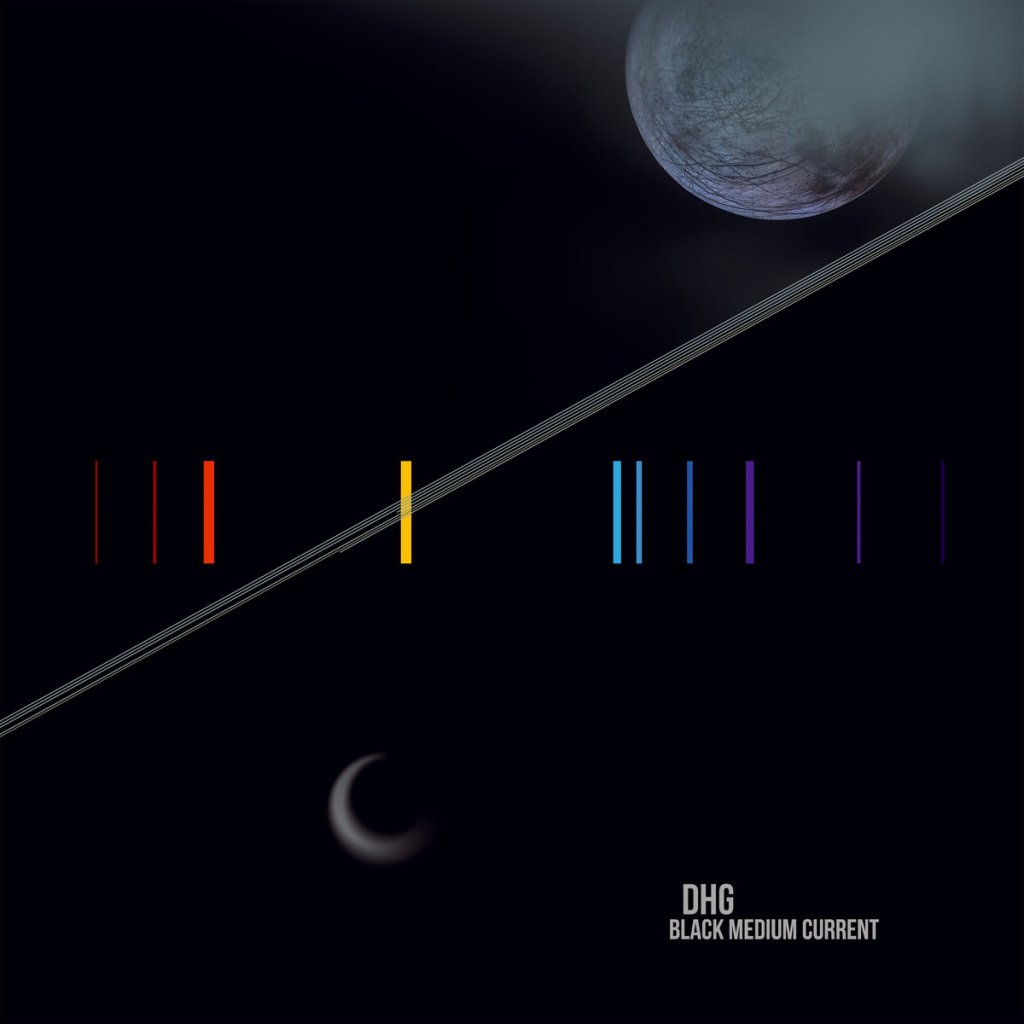
There is a lot of diversity throughout the whole album, different moods, but it’s overall dark and melancholy. You say that you mostly ask questions and don’t want to give answers, but the conclusion especially feels somewhat bleak and pessimistic. Does it reflect your own take on life, or was it the product of the circumstances?
It would be wrong to say it’s my outlook on life. It’s probably more my acknowledgment of what life is. This existential dread that is on Black Medium Current is what I’m processing, and the conclusion isn’t that I’m afraid to be alive. The conclusion is actually the opposite: it’s that there is a lot of beauty to this pain as well, because this pain is built up on beauty; it’s built up on the enterprise of relationships, and as they crumble and fall, the grimness of it is the other side of this beauty. For me, Black Medium Current has become a conduit to come to terms with living and be factual about it, instead of escaping from reality by making up another world to live in, as you see in a lot of religious communities, for example. I’m not saying that religious people are wrong to believe it—they’re just wrong [chuckles]. They can believe whatever they want, whatever floats your boat, in a way, but I wanted to take those security blankets aside and see what’s left, see if you can come to terms with that existential dread—which really exists and which is the reason why we made up all these stories in the first place—and if you can find some beauty in it.
What is striking about Omniverse Consciousness is that at first, it feels very chaotic. It isn’t that easy to approach. But then it has all these beautiful parts, and there is some kind of harmony that comes from there.
Yeah, I think that in the end, I’m much more interested in beautiful music than in ugly music, but I want to reach this beauty through discomfort. I think that’s a more honest way of reaching it. The beauty isn’t there to lull you in. It is some kind of acknowledgment, some sort of “aha” moment within the chaos and the darkness.
The darkness doesn’t negate the beauty, but the beauty contains the darkness, something like that?
Yeah, it feels more honest. I’m sure Barbies are made to be beautiful, but it’s the kind of beauty you lull yourself with to escape the realities of the world. When I’m saying beauty, I want to reach that other beauty that resides in the ugliness. Why are things defined as ugly to begin with? What’s the reason? What’s the mirror there?
You played plenty of gigs and festivals since the release of Black Medium Current, including Steelfest. Before you did, you published a post on the Facebook page of the band asking people to come forward if they had something to say about that, and of course they did, and you answered thoughtfully to everybody. Why this choice, and what has this little social experiment taught you?
I’m not afraid of opinions, and what I can try to offer people is whether their opinion is based on intellectual honesty, or if they’re just rolling with the times. People call me a fascist, you know, people call me a Nazi. I even read a post yesterday that some guy wrote after our Greek shows where he says he’s absolutely 100% sure that I’m a fascist and a Nazi. And I found it so funny, because he’s absolutely 100% sure of something that is completely 100% untrue [laughs]. It’s so striking. When I ran down his points, it was very simple to show the flaws. I’m not saying that the person in question would see these flaws because he’s in his own mindset and has his own justifications, but I was writing this also for other people who were maybe unsure, afraid, or didn’t really know what to think of it. I wanted to show how you can think about it reasonably and logically. Back to the guy who said he was 100% sure I was a Nazi: here were his reasons. According to him, I played with a guy who had an affiliation with a right-wing group—that was his number one point—, I had a drummer before that wore a T-shirt with a symbol on it, and thirdly, I played at Steelfest. And all of this is so flawed—he can’t reach that conclusion with these three points. What he can say about the fact that I played with somebody who had an affiliation with a right-wing group is, “I don’t like that Yusaf played with this guy,” but this is as far as it goes. He can also say, “I don’t like the fact that Yusaf chose to play at Steelfest”—that’s as far as he will get. He can’t conclude that this means I’m a fascist. It’s the same thing with our drummer Øyvind [Myrvoll]’s shirt: the only conclusion he can reach about Øyvind at that point is that he wore a T-shirt he doesn’t like, and he doesn’t know the reasons for it.
I’m a leftist, and I’m open about it; everybody that knows me on a personal level knows this, and they would laugh if they heard that I was ever subjected to this stuff. But I will say this: there is something wrong with some people in the sense that it doesn’t really matter if they’re really far to the left or far to the right. I prefer the people who are far to the left because at least their heart is in the right place, but I noticed some similarities. Number one: they’re very obsessive. They obsess over things all the time. “You shouldn’t play there. You’re a Nazi!” And then they often are very hypocritical. It’s not the same standards for every band. I’ve seen tons of bands playing at Steelfest without facing any criticism. Maybe these are bands they like, I don’t know, and I trust that they had a proper reason. Third: they lack self-awareness, because when I make a point to them, for example, they can’t really read what I’m writing. They’re already thinking, “Yeah, that’s bullshit!” before even reading it. And the last thing is that they are very, very easily offended. You play somewhere—they’re offended. You say, “Sorry man, I do play there. Sure, you don’t like it, but I’m not a fascist, you know?” And they get offended. And if you say, “Hey, man, we’re really on the same team,” they get offended as well. These are the four points that I think are very identifiable, both in the extreme left and the extreme right. I think that’s a problem, and we’re running into that world now on a really high volume. The culture and gender wars are at an apex now, and people are stepping up these games instead of just taking a step back.
Talking about gigs, what’s next for you? You’re going to play Black Medium Current at Roadburn. Will it be the first time you play the whole album like that?
First time playing the whole album. It’s something I really wanted to do, so I’m really glad the Roadburn people reached out to me. This isn’t something I sold to them; it’s actually something that they contacted me for, which felt really cool as well. I didn’t have to force that setlist in somewhere; there was a promoter out there that really wanted that and wanted that exclusively. They weren’t interested in an old-school set, and I think that makes it more interesting as well, in the sense that a lot of special sets in our genre are like, “Emperor playing In the Nightside Eclipse,” things like that. So I’m really glad a festival reached out to us to say, “No, we really want the latest album.”
You said somewhere that you think this album is best listened to on your own, with headphones. How do these songs translate live?
I guess when I said that it’s best experienced with headphones, I meant the vinyl or the CD… I think live can be an even more immersive experience, even if you’re standing there together with people. Concerts are funny that way, because even though you’re there with possibly thousands of people, you’re still kind of alone experiencing the music because it’s loud and you’re locked into it, especially if you’re enjoying it. You’re there with thousands of people, but at the same time, you’re just there by yourself.
What’s next for Dødheimsgard? I think you’re working on new material with Ved Buens Ende—what’s next for your other projects as well?
First thing coming up is packing and going to Croatia and Serbia tomorrow for two shows, and then I’m finished for this year. We’re writing new material for Dødheimsgard, but we are at that stage where we’re still trying to find our footing, so there’s probably a lot of material there that will be thrown away. The next thing that’s going to be done and recorded will be the next Dold Vorde Ens Navn album, which is pretty much finished material-wise—we’re looking into entering the studio at the beginning of next year. As for Ved Buens Ende, we have a lot of parts; it’s there, so whenever we want to gather it and give it a form, it’s ready. I really don’t think we need any more material than we have, we just need the motivation to do it, and to be aligned that this is what we want to do. I’ve been busy with Dødheimsgard, and Carl[-Michael Eide] has obviously been quite busy with Aura Noir since they started playing live again… We’ll see when the time is right!
Follow what Dødheimsgard and/or Doedsmaghird are up on Facebook or on Instagram.

