We’ve never known much about Farida Lemouchi. Even though she was the voice of The Devil’s Blood, the center of the attention on stage, off stage, she was mute; the composition, lyrics, and declarations of the band were all handled by the mastermind and guitar player of the band, her brother Selim Lemouchi. After his death in 2014 and a deeply emotional performance on the stage of the Roadburn Festival a month later, Farida took a step back. For years, we only heard her in a couple of collaborations, including a memorable cover of Aphrodite’s Child’s “Four Horsemen” with Griftegård.
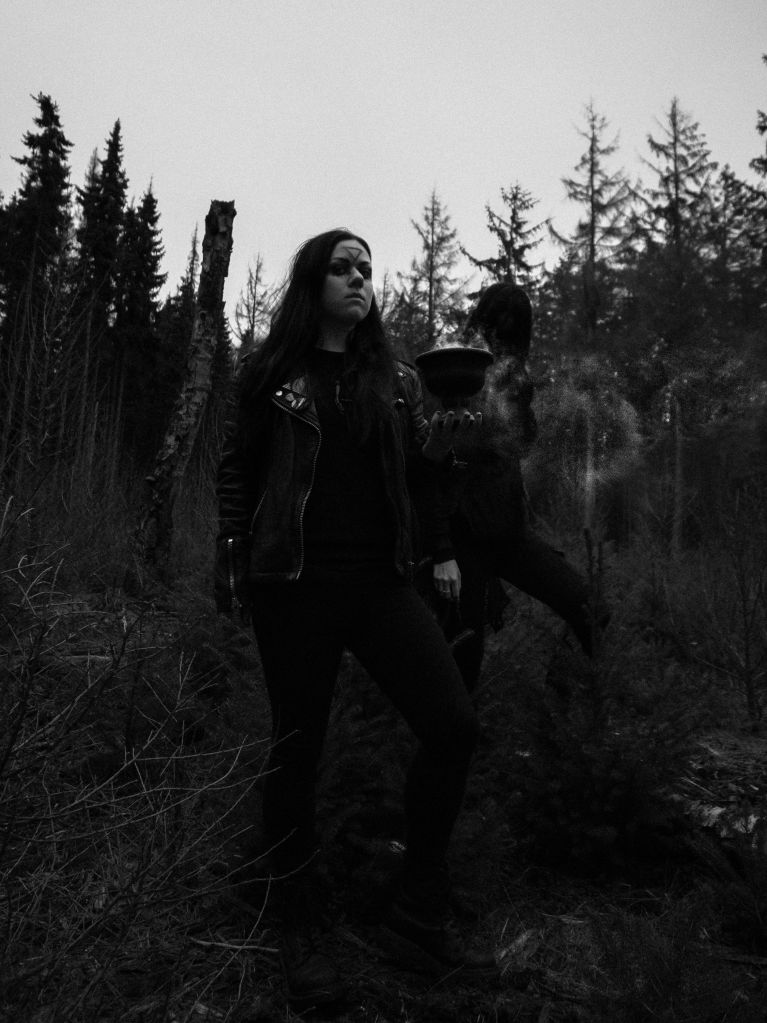
And then in 2019, with three bandmates from The Devil’s Blood (Job van de Zande, Oeds Beydals, and Ron van Herpen) and a couple of new associates (Marcel van de Vondervoort for a while, and then Bob Hogenelst and Matthijs Stronks), she came back on the same stage for the 2019 edition of the Roadburn Festival as Molassess. After a first EP, Mourning Haze / Drops Of Sunlight, the album Through The Hollow was released seven years after the last creations on which Lemouchi, Beydals, van de Zande, and van Herpen were all involved: III: Tabula Rasa or Death and the Seven Pillars, the last – and aborted – album of The Devil’s Blood, and Earth Air Spirit Water Fire by Selim Lemouchi & His Enemies.
But Molassess isn’t a headless version of The Devil’s Blood: it doesn’t aim to reproduce formulas that were proven successful, nor to resurrect what has been put in the ground years before. It doesn’t try to leave everything behind either: the band sounds like it’s actively digesting its past, constantly negotiating with the ghostly presence of Selim. Despite its sophistication and the beauty of its arrangements, Through The Hollow feels pared-down, authentic, at times brutally so. Brave and vulnerable, meticulous and imperfect, deeply alive, it tells the detailed, sometimes grueling story of a grieving process, and the story a rebirth, too: it looks like emancipation – Farida is finally singing her own words, the musicians play their own music – but goes with its own brand of suffering as well. Death takes but gives, too; it’s the source of the brightest creations; it transforms, metamorphoses: Selim may rest in peace, the ones he left behind obviously heard his message.
Through The Hollow was the perfect opportunity to finally listen to what Farida, who was once called “the Mouth of Satan”, has to say. Here are her musings on art, life, death, and everything in between.
This interview took place in November 2020 and was first published on Radio Metal.

© Esther van Waalwijk
Continue reading →

 Chaosphonia