Through the years and with the help of different musicians, Insect Ark, the solo project of Dana Schechter (Swans), got different nuances, always dark, dreamy, and largely instrumental, spacey and sludgey on Portal/Well, chthonian on The Vanishing. On its fourth album, Raw Blood Singing, the music is both beguiling and crushing; it unearths old places and explores new ground, adding the inimitable drumming of Tim Wyskida (Khanate, Blind Idiot God) and vocals to Dana’s bass and lap steel. A couple of hours after their performance at this year’s Roadburn, I had a chat with the band, including their live guitar and lap steel player, Lynn Wright, to hear their take on this last album.
Raw Blood Singing turned out to be the ideal pretext to dive into the core of the project, talk about its history, and reflect on its essence, but also to listen to three seasoned musicians speak about the twists and turns of creativity, from its material conditions of existence to its most intangible aspirations…
This interview took place in April 2025 and was first published on Radio Metal.
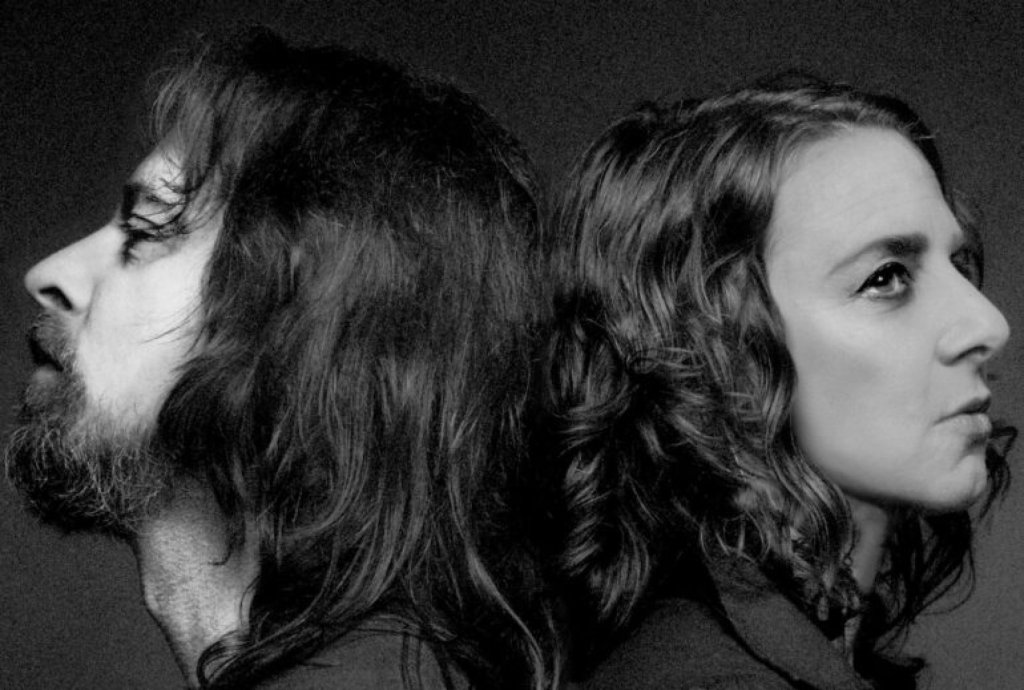
You’ve both played at Roadburn before—Tim last year [with Khanate], and Dana a few years ago. How is it to be back?
Dana Schechter (bass, vocals, lap steel, electronics): It’s great to be back. Our last album [Raw Blood Singing] came out in June 2024, so it’s perfect to get to come here to present its music: we played most of it today, with the exception of one song. And it’s always a pleasure to be here. It’s a community event that people really appreciate; they love the effort that goes into its curation, and you really feel that. It’s wonderful to be here.
A friend saw you live not long ago, but then it was just the two of you. How did this new set-up with three people come to be?
Dana: We played some shows in France as a duo in 2022—Rock in Bourlon, L’homme sauvage—and we played at the Little Devil in Tilburg.
Tim Wyskida (drums, electronics): But that was before Dana and I did the new album. With Dana doing vocals on Raw Blood Singing, it was going to be impossible for her to play lap steel, bass, and do vocals. That’s how the band ended up developing, with Lynn [Wright] taking part. Lynn and Dana had played together before in Bee and Flower, plus we’re all from New York and ended up in Berlin. So we had Lynn working with us, doing a lot of shows and festivals, and it’s gotten to that point where the band feels really tight and strong-sounding. It always takes a little while for a band to fully develop, but on the last tour we did, we felt like we were hitting that point where it sounds really right and powerful.
On stage, you indeed introduced yourselves as a band from Berlin. How did you all end up there?
Dana: Separately. Actually, we knew each other in New York—I’m not from New York, but I lived there for twenty years. Lynn and I had a band called Bee and Flower quite some years ago, and we’ve remained friends since then. Tim and I were friends in New York and did a small project together. I had lived in Berlin in the early 2000s, when I had Bee and Flower and Lynn was no longer in that version of the band. Then I went back to New York, but during Covid, I was on tour with the previous drummer of Insect Ark [Andy Patterson], and we got stuck in Europe. I decided to stay on in Berlin because for that whole time—more than ten years—I had kept my apartment there. I just looked at the reality of what was happening in the world, and I thought I’d stay in Berlin for the corona pandemic. Around that time, Andy, who was all the way to Salt Lake City and hadn’t been in the band for very long, really felt like it wasn’t a good time for him to do a long-distance project, so I thought, “I’m gonna stay put here.”
Not much later, Tim said he was trying to get out of New York, thinking of coming to Europe as well, so I told him, “I can tell you how it works here in Berlin if you had already been in the process of becoming a legal artist living here, getting a visa, etc.” So he moved, we played together,, and started working on some of the early songs that became Raw Blood Singing. That’s when your friend saw us I guess, if it was in 2022. We were doing a little bit of the old stuff and a little bit of the new stuff. Then, once we started working on the album and it became clear that we wanted to push it past an instrumental project for a number of reasons, I realized that doing the vocals on top of the very intricate lap steel live loop things I was already doing—technically, my setup was already pretty much at maximum—was going to be impossible. Lynn was thinking about leaving New York, and he wanted to come to Berlin too…
Lynn Wright (lap steel): I’d been coming and working in Berlin two or three times a year for the past fifteen years, and then our friend offered me an apartment with a very old contract—so very cheap—so I said, “Okay, I’m coming!” I’ve been living there ever since.
Dana: And Tim and I were like, “Who could we work with?”
Lynn: I’d been working on films—I make studio music for films—and they were talking about the fact that they couldn’t play all this stuff, so I said: “I understand.” Dana taught me the parts, then we started playing together, and it worked!
Tim: Being an artist in New York had become almost impossible. The cost of living there has gone up so high that you have to spend most of your day making money somehow and have very little time [to create]… For me, that was a big motivation to come here. I imagine it’s the same for these guys: it just gets frustrating having to spend the entirety of your day coming up with enough money just to pay your rent and food [chuckles]… So yeah, I kind of just escaped and came here, to Berlin, and it’s not the easiest life, but it’s much easier to play music for a living in Berlin than in New York. In New York, it’s nearly impossible, unless you’re in some huge mainstream band or something.
Dana: And also, speaking for myself, having worked in Europe a lot when I lived here before and playing with quite a lot of different people, French and Swiss artists, I really got a taste of what it was like to live and work as artists here. It’s certainly not easy, but compared to the kind of livelihood an experimental artist living and working in America has… Forget it. It’s always a leap of faith to move to a different continent, but what are we gonna do in this life? Just live safely? I think you don’t really develop if you never take a risk.
How much has living in Berlin impacted your creativity?
Tim: I don’t know if it has a direct effect, but Berlin feels like a much mellower city. People from Berlin laugh at that and say, “You think that’s mellow?” but coming out of New York, it seems that way [they all laugh]. I guess that it might have had some effect on the music: when you’re in New York, there’s all this tension, whereas in Berlin, I find it quite relaxed. You can sink into things in a different way.
Dana: Just the reality of the cost of living in Berlin being so much cheaper compared to the cost of living in New York meant that when Tim and I were working on Raw Blood Singing, still in the shadow of Covid—there wasn’t much happening—, we were in the studio sometimes six hours a day, five or six days a week. That’s what we had to do, and we knew that it would take that long to get the music to the level we wanted. Previously, I had written all this material, but then we decided to rework it. Some of it remained pretty intact, some of the songs I wrote we just adapted, and some we really rearranged. We really enjoyed that process, and we could never have done that in New York. Most artists in New York don’t even have rehearsal spaces of their own where they can keep their equipment—it’s a huge thing. Imagine if you are a painter and every time you wanted to paint, you had to bring all your canvases, all your oils, all your liquids… By the time you’re set up, you just don’t have any creative juice left. So despite the lack of cultural funding going on all over Europe and the reality of modern life, I still think it’s a better place for us—for myself, at least.
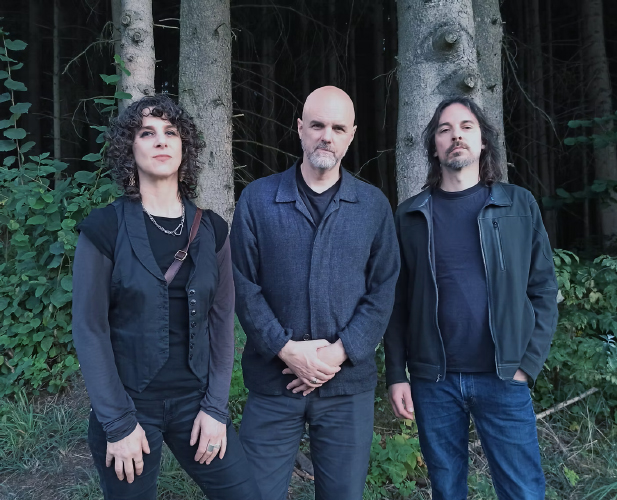
When Tim joined in, you had most of the material ready already?
Dana: I would say that everything except for “The Hands” and the last thing that we wrote, “Ascension”, was stuff that I had previous versions of, where I was playing everything or thought of every element. Some of that stuff just went to the garbage can, and the rest improved greatly by having Tim’s involvement as a writer.
Tim: A lot of the ideas were Dana’s, and it was a matter of me listening and saying, “That part is really strong,” or, “Why don’t we shorten that section,” just arrangement ideas, and of course writing my drum parts as well, kind of helping shape overall the sound that we were going for… We were able to really sink into it in a way that I haven’t been able to with maybe any album I’ve ever done in the past. As Dana said, it was either nine months or a year where we were five or six days a week, from six hours going in, working on it, and then I would get home, have dinner, listen to everything we had worked on, have ideas, come in the next day, develop these ideas… We really got to sink into this in a way I hadn’t been able to just because living in New York doesn’t allow that much time to do something like that.
Dana: But that time we were in the rehearsal place, I don’t think we micromanaged it. It was more about what felt good and having the chance and opportunity to explore what something can be without stress. Which is very unusual, and it’s a beautiful thing, because you have a different approach when you feel like you can just try things out. If it doesn’t work, you just throw it away. I had never had that much fun writing, and I certainly hadn’t really written with anybody else. When you’re in a band, oftentimes, somebody comes up with a part, and then somebody else comes up with another one, and you sort of shape it together, or somebody comes in with a finished chord progression and a vocal melody… But [for Raw Blood Singing, working together] was really cool and exciting. We also got to know each other much better during that process. We had known each other for a while, but we didn’t know each other that well, and we found out we were really well-suited creatively, and also both willing to put that much work into it. That was pretty insane—not a lot of people would do that, put that much time into it, but that felt good to us.
Maybe it’s because of this way you’ve been working on it that even though it’s still fairly crushing music, there’s a warmth to the album, something almost intimate—I don’t know if it’s the right word…
Dana: Yes!
Tim: I remember [Dana] talking early on about wanting the music to be kind of a combination of the ugly and hard with more beautiful elements, having this kind of dichotomy, bringing these two worlds together, and I think we achieved it.
At what stage did you decide to add vocals?
Dana: When I started this project as a solo project in 2012, on one of the sides of the first 7-inch, I sang, and then I just gave up on it because it was too much. At that point, my live setup was way too complicated, so I thought, “Let’s take a break from singing.” I’d been singing in my previous band, and I wanted to take a break. So that was quite a long time where it was just instrumental, and then once we approached the music from scratch, we thought, “Let’s just keep going.” Tim had heard my singing voice and really liked it, the manager that we were working with at the time was a big fan of Bee and Flower and was encouraging me to sing, and other people had also asked me, “Hey, why don’t you sing again?” With this feeling of everything being possible from ripping that material that I initially had, I ended up thinking, “Yeah, why play it safe? Let’s give it a try and see what happens!” I wasn’t sure that would go, but in the end, I felt pretty good about it, so we decided to go for it.
How was it to put words back in this band? Did it change how you wrote the music?
Dana: No, not really, because we’d already written almost all the music, with the exception of two of the songs. We arranged the music, and then I think I just listened to what we had and came up with vocals to fit around it.
Tim: I was surprised how quickly it worked out. I thought trying vocal ideas would be a longer process, but everything Dana came up with, immediately I was like, “Oh wow, it sounds good right away!” [chuckles] We spent a lot of time working through stuff for the music, but the vocals went very quick.
Dana: We had a good amount of time between writing the music and then recording it, at least half a year, I think. That’s when I really fine-tuned it. I would write it without words: I wrote the melodies, then just sang word-shapes and vocalizations, and then fit some words around that. I don’t really consider myself that much of a lyricist, it’s not my strong point and that’s fine. I try to make up stories or have it have some meaning to me, at least, but I’m not one of those people who writes words and then builds the song around it. Many people do, but I don’t think I’ve ever done that. It would be an interesting process, actually, to write some words first and see if that dictates a different direction. The music is very minimal, so we didn’t want it to have tons of vocals on top of that.
You worked on the album for about a year. What about the recording?
Dana: The basics were done pretty fast, actually. Then, there were some overdubs done in a few different places, plus a little bit of last stuff, and then it was mixed somewhere else. It didn’t take that long…
Tim: We went to Athens, Greece, to a place called Unreal Studio. We spent about a month there recording all the basic tracks, and then we did some additional stuff back in Berlin, I think?
Dana: Yeah, I did lap steel overdubs, all the keyboard, and the backing vocals—all the stuff that didn’t need to be done when we were on the clock at the recording studio—at our rehearsal place. It is in a World War 2 bunker, so it’s really quiet there [chuckles]. I set things up with the help of an engineer who’s got the basic setup going, went in there, just tracked it, and sent it to the guy who was going to mix it in New York, Colin Marston—he’s made a lot of records, he’s a great engineer. He put it all together and mixed it from there.
Tim: He’s in Krallice, Gorguts… I’d worked with him on a couple of records: he worked on a Khanate album, and I did another record with Mick Barr with him [The Overmold]. Colin’s great, but it was my first experience with a remote mix, and I was skeptical—how could this work out?—but it worked out great. Colin has a unique, good ear, and once we got on the same page and knew what we were going for, he did an excellent job.
Dana: He mixed The Vanishing, Insect Ark’s previous album, so he had some reference point. The material’s pretty different, but it’s not a total departure.
Has the fact that you played with different people throughout the years impacted this project?
Dana: I think everything filters in somehow. Sometimes, you learn from some other projects you’re in; sometimes, you think, “That part is great for this project, but this thing will work better for that one.” But no, actually, I don’t think there’s a really obvious connection between projects that I’ve been in. Obviously, I have a certain style when I play bass and a certain style when I play lap steel, and if that style shows up in different projects, I think it’s because of how I taught myself to play in general or the tendencies that I might have. It’s the same with Tim: he has a very distinct style, and that came with him, even though Insect Ark’s music is very far from Khanate’s. You can hear some of the signature things that he does; when he hits the high hat and the snare, it’s really a Tim Wyskida move, and it’s a beautiful thing. It’s got a power to it. [To Tim] When you started doing those things on drums, I was like, “Yes, that fits great in both [projects].” But if you put the two bands next to each other, you would never say that Insect Ark sounds like Khanate.
Lynn: That’s what I call the Wyskida sound.
Tim: Right. Certain aspects of that approach work in both projects.
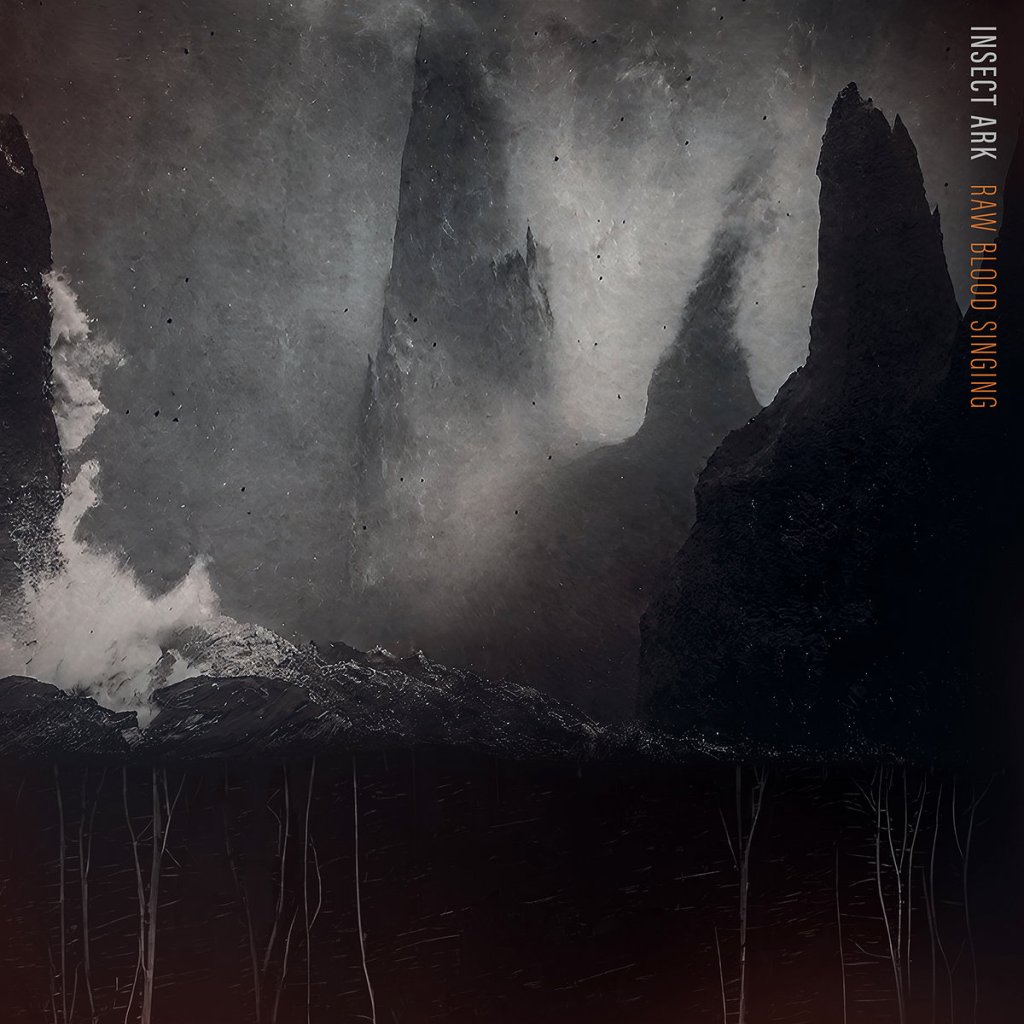
There are catchy elements on Raw Blood Singing—earworms and vocal melodies—that I didn’t expect to hear on an album made by this person from Swans and this person from Khanate…
Dana: Not the catchiest bands, true [laughs].
Tim: That was something that I focused on a lot, actually. I always liked what you’re talking about, these kinds of catchy lines. I like that in a certain pop music, but in pop music, the music lacks depth, and I get bored with it quickly. Then, in avant-garde music, the music is very interesting, but it often lacks something you can kind of grip onto, a line that just keeps coming in your head, something like that. For many years, I had this thought of combining this kind of catchy, melodic aspect with this kind of more avant-garde approach to music. When Dana and I started working on what became Raw Blood Singing, I started to think of that, and I thought, “That might actually be where we can bring these two worlds together.” So I started focusing on that more myself, asking myself, “Alright, how can we kind of bring the catchiness of pop music into the world of the avant-garde approach to music?” for lack of a better way to put it. Usually, these are very separate worlds; these people pretty much hate each other [laughs], but I was like, “I think they can actually coexist!” For me, at least, it started to be a bit of an aim.
I think it works because it’s two different ways to make the music visceral. The titles of the songs and the album hint at something visceral as well, within the body. Where does the title of the album come from, actually?
Dana: It’s a line from one of the songs: “I want the raw blood singing in my veins…” In English, when something’s singing in your veins, it means that it’s pumping really hard: anger can sing in your veins, or music… It’s the movement that does the singing in the veins. It’s not literally about me singing. The line has a different meaning; it’s a song about wanting to be alive and be present because of the inevitability of decay, demise, and mortality. It means, “I wanna live, I wanna feel alive while I’m here. I want to experience life because we don’t know when it’s going to be gone. I want the raw blood; the rawest thing, I wanna feel it.” I felt like it was a good assessment of the lyrical direction of the album for me as the lyricist, this sort of raw approach to wanting to try to have a moment of experience that feels like life, that proves to me that I’m not dead sometimes. It’s hard for me to articulate it, actually—I think the lyrics did a pretty good job at explaining it, better than I’m doing right now [chuckles], interpret that however you wish. It seemed like a good title, even though some people were confused by it.
Tim: Maybe it’s a connection to primal urges, and living in accordance with that. In civilization, you get pulled into this kind of unnatural approach to life, and you just want to return to wandering in the woods…
Dana: … Being an ape… [laughs]
Tim: … And sniffing each other and all [laughs]. This kinda thing. And feel alive, I guess, like a free animal.
Dana: Yeah. Especially after corona, I think a lot of people also realized that all these things that we have spent our lives working on can just vanish very quickly: “What are our priorities with our lives? Let’s be glad to be alive because we saw a lot of people who lost everything.” They were able to recalibrate what’s important to them. So that definitely happened, plus on top of that, I got stranded across the ocean from where I lived, and I thought that it could be the opportunity for a change in my life for the better. There were a lot of these kinds of feelings flying around within that time frame.
It contrasts with the previous album, The Vanishing, which I interpreted as something about death or impermanence…
Dana: Absolutely, but that’s what it was to me at the time: wanting to vanish. Not in a grim way: just a desire to become part of oblivion, which we all will anyway.
And now it’s almost the opposite, you wanna be embodied…
Dana: Yeah, but in a way, they’re kind of the same thing. I would have to think about how to articulate that in a way that would make any sense [chuckles].
Tim: You vanished, and now you’re kind of reborn in a way? It started with a negative take on things, like everything is too much and you wanna vanish from it, and you’ve come out on the other side, wanting to live…
Dana: I’m not really sure that I wanted to vanish… It wasn’t so much about me wanting to vanish; it was about the impermanence of life in itself. I actually see it as much closer to the meaning of the new record, actually. They’re two sides of the same coin.
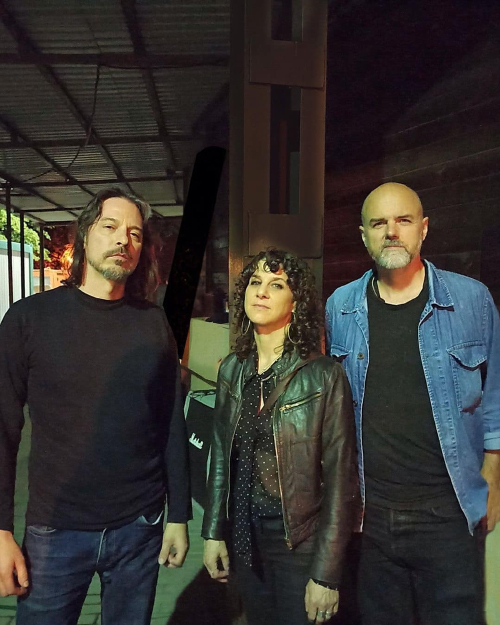
[To Lynn] I don’t know if you wanna talk at all…
Lynn: I’m enjoying listening! [laughs]
Dana: He’s enjoying sitting and resting…
Tim: It’s interesting to do interviews as a band. In a band, there’s a lot of stuff that you don’t talk about. You’re working on the music, and you do your thing. All the bands I’ve played in, when we do interviews together, we learn a lot—with Khanate, for instance, our member Steve [Stephen O’Malley] can end up saying to me, “I had no idea you thought about this that way,” even though we’ve known each other for half of our lives! [laughs]
Lynn: I’ve been friends with [Dana] through the recording of every Insect Ark record, and to me, both The Vanishing and Raw Blood Singing are about immersing yourself so much into a form of living a life that the self disappears. It’s like you’re vanishing because you’re being, in a way? I can’t think of a better way to put it, but that’s how I see the connection between the two albums. Knowing you [Dana] and knowing how you write and all of this, I see it as full immersion until you’re completely lost in a certain state.
Yeah, immanence…
Dana: And isn’t that the goal with art anyway? To erase the self and just experience.
Lynn: Exactly.
Dana: If you have a really deep experience of any kind to the point of losing track of yourself, you’re sensing it in a way that involves your whole body and your mind. You unhinge from the plane of reality for a little while, and you’re just in this amazing place… We can’t sustain it, but it would be incredible. Maybe people get there through drugs sometimes, but I don’t do drugs, so I get there through other methods.
Your perspective is interesting, Lynn, because you came to the material from the outside, and then you…
Dana: Got dragged in!
Lynn: I got to sit with Dana and ask her, “How did you do this?” “What is important?…” Yeah, that’s interesting, coming in.
Dana: [Lynn] is, by leaps and bounds, a much better guitar player than I am, but I developed my own lap steel style just from playing it.
Lynn: She’s very interesting and unique. A lot of people on their instrument, when you hear them play, you don’t know it’s them, but when you hear Dana, you know it’s her. And no matter how much you play and how good you are, you have to learn to be faithful to that without imitating it. If you imitate it, it sounds like a lie—it sounds like karaoke. It took me a while: normally, a lot of times, I learn people’s music in a day and then record it with them, but with her, I had to really nuance it, like, “So, how does this work?” I’m being her, but I can’t be her. For me, it was really good, it’s great. It’s been a lot of interesting things, getting to play again with Dana, whom I always loved playing with, and then with Tim—how could you complain about playing with people who are good players? But you do see the music entirely differently. I’m just making it work live, but then to hear you discuss the recording, it’s interesting.
Dana: Yeah, because you weren’t there for that. But I want to say that after we did the tour in March, that’s really when, as Tim said, it all started to gel, specifically with you [Lynn] playing my lap steel parts. It’s actually hard to learn somebody’s lap steel parts, it’s like trying to learn somebody’s cello parts: they’re fretless instruments, which means there’s even more detail that somebody could put in, like how long you drag a note and how hard you hit it and how you sustain it… It’s all these weird micro timings that are really tricky; they’re really particular to the person who writes them, so you can’t just learn them like that [clicks fingers]. Somewhere along the tour, it just came into great focus, and sometimes in rehearsal I’m listening to it, and I’m like, “Wow, he’s fucking got it, it’s amazing!”
Lynn: The last couple of months, it’s no longer that I try to recreate something. We’re playing this music that they wrote, but it’s not conscious, we’re improvising and playing around… When we started, because she played so many instruments on the album, Tim was triggering keyboard parts and things, but now, half of that is gone. On the songs, we just reduced the amount of that by half because everyone’s playing so well…
Dana: We adapted it for the live show for the people who are involved now, which is a much more exciting situation for all of us. We’re faithful to the album, and that’s what we used as a starting point because that was the common thing that we could focus on, but once everybody gets really comfortable, then you can start stretching it and playing with it. I think that’s very different from where we were even, say, three months ago. It feels amazing.
Lynn: I was a fan of the band—I think I was at their first show, in New York.
Did it change the way you think about your playing, Dana, to have to explain it to Lynn?
Dana: No, because he’s so good that all I did was make some videos to show him. I just videotaped myself playing it, because it’s a really weird instrument anyway, so.
Lynn: The videos were great, and you have a very interesting technique, because you play with a guitar pick, a bass pick. I always played guitar with a pick, but when I play lap steel, I play with my fingers, so it was like learning this instrument I’d played before all over again. It was great: I just sat in my studio with the videos and the albums, looking at all these different parts she wanted me to play. Then there was a point where we just started getting together, and suddenly Tim would be like, “What if we did this?” We had news ideas: “We might add something there…” The last few months were great for me: you get to imitate somebody you like…
Dana: And make it your own, too.
Lynn: Exactly: and expend. Last night, with our sound person, we listened to the recordings, and that was really odd, because “The Vanishing” sounds nothing like [how we’re doing it now]. Anyway, that’s my whole commentary, I’m done [laughs], you can go back to talking to the others.
What’s next for Insect Ark?
Tim: We are going to the US and to Canada to do a tour. I’m going to be in New York since I’ll be doing shows with Khanate in North America, and then we’ll all meet up and head out. We’ll start in New York, go through the Northeastern US and to Canada, then down the middle of the US, then up the Eastern Coast with Fórn. When we get back, we’ll have a show with Oranssi Pazuzu in Berlin. We will play that, and then Dana will dive into Swans and tour for a number of months. So we’ll see, we’ll figure out what to do around Dana’s Swans touring schedule. We’ve been talking about working on new music and seeing what new opportunities pop up live, see what offers come in, and go from there. But I think we’re very interested in starting to work on some new ideas, getting that flowing.
Follow what Insect Ark is up to here, on Facebook, or on Instagram.
 Chaosphonia