“I am that serpent-haunted cave
Whose navel breeds the fates of men.
All wisdom issues from a hole in the earth;
The gods form in my darkness, and dissolve again.”
―Kathleen Raine, “The Pythoness”
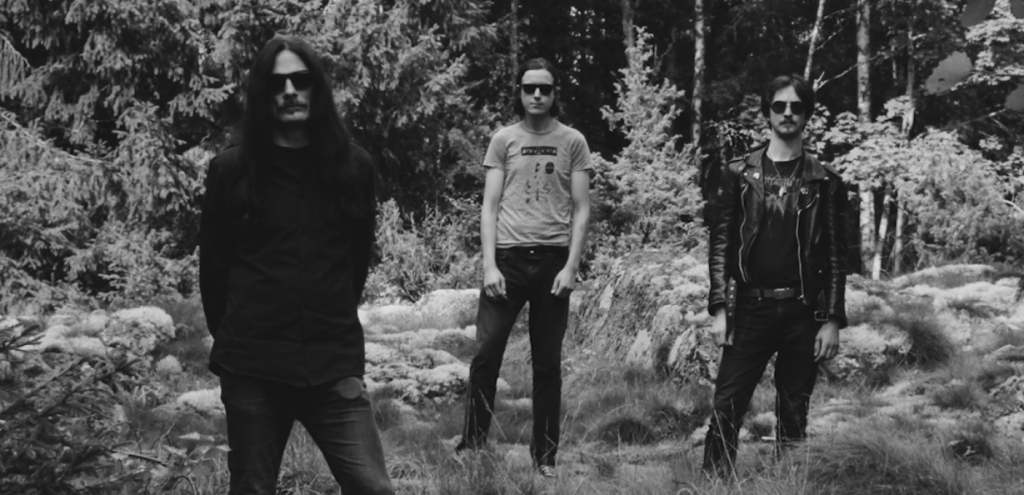
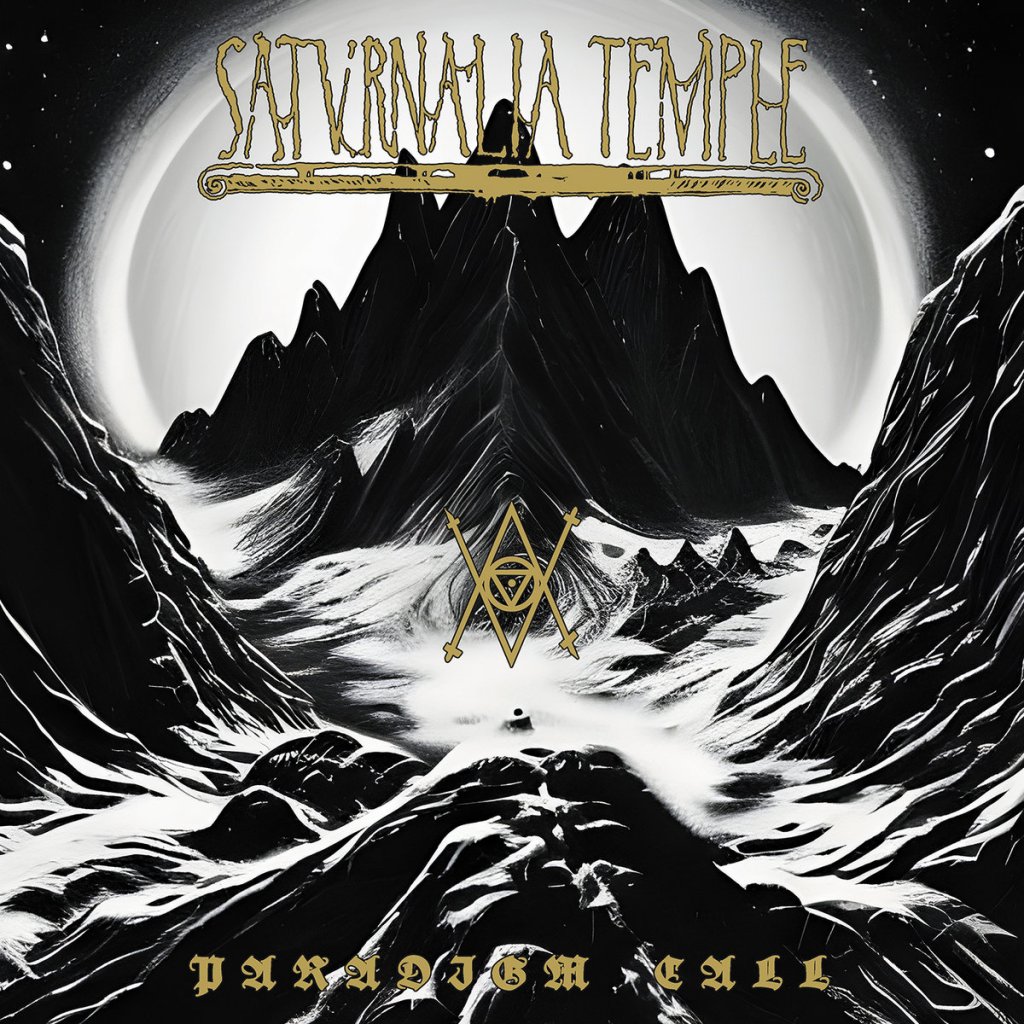
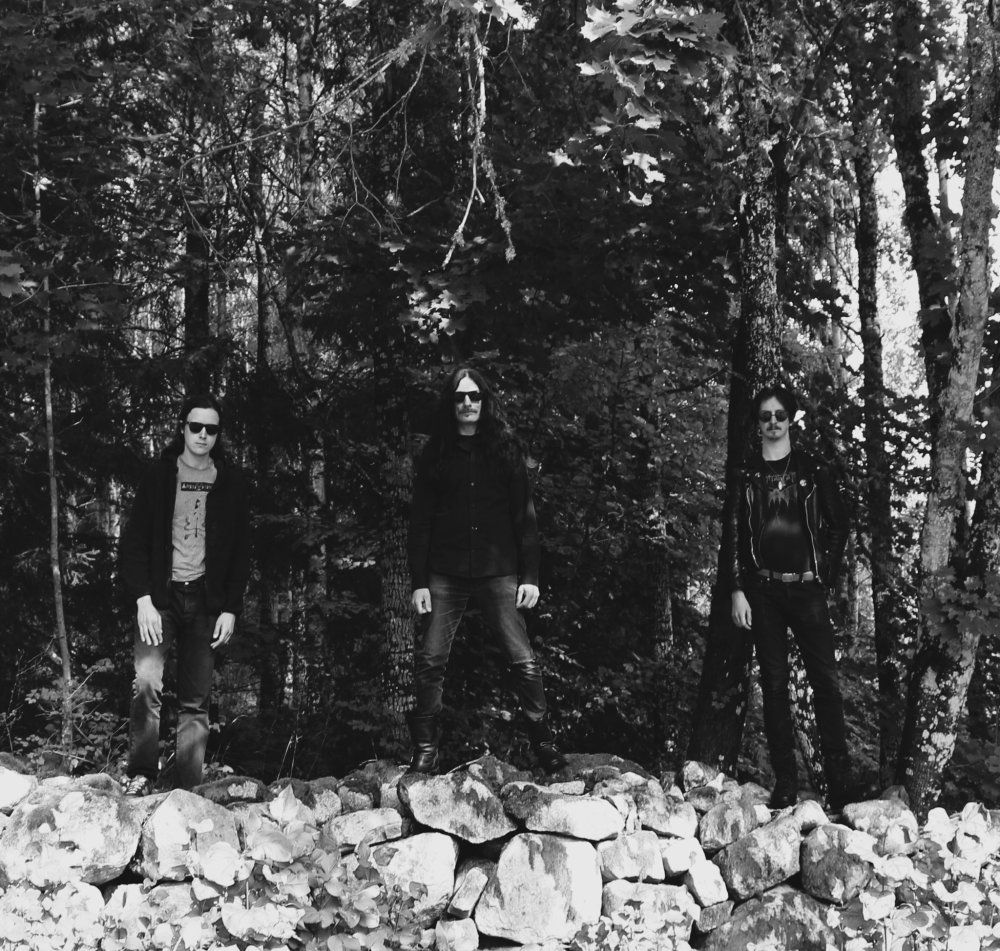
For almost two decades now, Saturnalia Temple has been forging its own kind of alloy, mixing old school doom and extreme metal with psychedelism and esotericism. The result is hypnotic and meditative, both crushing and elevating. Its last album, Paradigm Call, was released about a year ago and was the last piece of a first cycle. Its mastermind, voice, and composer, Tommie Eriksson, invited the brothers Gottfrid and Pelle Åhman to join in on stage in the meantime, and this collaboration resulted in some potent chemistry, fertile soil and widened horizon at once. The time was due to get some perspective on what has been achieved so far, and what awaits the band for the future.
That’s what I got the chance to talk about with the three musicians before their concert as headliners of the Eindhoven Metal Meeting warm-up evening last December, where ten years ago almost to the day, Gottfrid and Pelle had played their last set as In Solitude. Fittingly, cycles closing and opening are what this long conversation is about―patterns emerging, past and future, and the flow of creativity. But first and foremost, it is about music: its content, its nature, its power.
This interview took place in December 2024 and was first published on Radio Metal.
Paradigm Callwas released a few months ago. How do you feel about it now, with a few months of distance and after playing these songs live a couple of times?
Tommie Eriksson (guitar, vocals): It was interesting because I did everything myself on the album. I’d done that before on some records, we’ve had trouble with drummers so I’ve had to step in sometimes to play the drums… And I usually work like that: I do everything. I write and record in a very organic process since I have my own studio. I live in the countryside and it’s connected to this whole experience: being alone in the forest, getting inspired, writing, recording… It’s going together, it’s not separated, I don’t write and then record a long time afterward. Everything is set up, so I can go into the studio if I feel inspired, play some riffs, and when I feel that it is right, I can record it immediately. That’s basically how I did this album. It’s a very intuitive process. I’ve been doing this for a while now, so I know what I want, and I knew that this album would be more primitive, kind of simple. I tried to really make it simple—I didn’t try, it’s the wrong word; I allowed it to be as simple as it was. I didn’t polish it, I didn’t elaborate. I did riffs that felt so simple it’s almost ridiculous. For instance, the riff of “Revel in Dissidence” is made of such simple notes that it’s bordering on being basic, but I thought, “I think I can carry this.” It can have power because of this simplicity. And I still feel the same way about the album. I’ve never changed my opinion on my music, really, ever. Everything I’ve ever released, I still feel the same about it as when I made it. I rarely change my mind afterward or think, “Oh no, what did I do?” It doesn’t alter. I still feel that this album is exactly what it was supposed to be.
Do you care about feedback? Can feedback make you see your work in another light maybe?
Tommie: A lot of musicians who are also esoteric practitioners, like me, who are into the spiritual side of things and tend to shut out the world, always say, “I don’t care what people say!” But of course, it’s interesting to hear. You don’t release a record if you don’t want to interact with the world. It’s a bit coquettish to release records or do gigs and then pretend that you don’t care at all.
Gottfrid Åhman (bass): It’s a means of communication—at least, I think it is for us.
Tommie: Yes.
Gottfrid: So then there will be a response. As Tommie said, it can be interesting, but at the same time, you shouldn’t give it too much weight. It doesn’t matter that much because the thing is already done. It is what it is, and now it’s out there, interacting with the world, and the only thing you can do is sit there and watch it happen. What they do with it is up to the people listening to it. It’s out of your responsibility. That’s why you continue to make music, actually, that’s why you need to make a new record: because it isn’t yours anymore, it’s the world’s.
Tommie: Exactly. I’ve talked about that before: as soon as you release something, it’s not really yours anymore. You let it out into the world. Somebody asked me, “Do you care about other people’s interpretations? Maybe they interpret things wrong.” But they can’t, because as soon as I release something, if someone buys the record or listens to it, it’s theirs, and what it means to them is for them. In a way, it’s the type of freedom that goes with the creative process. I’ve felt quite lucky and happy about a lot of positive reviews that seemed to care about what we do, and understand it, actually. I was surprised because our sound is a bit odd, perhaps, compared to most modern bands, and then there’s our magical ideas… But many try to get into it, they really want to understand. I’m really happy that we’re getting that respect. I won’t change anything due to what other people say, if somebody writes in a review that we’re a crappy band, that doesn’t change anything for me. It is what it is. And it’s always funny to hear someone say, “Oh, this is the worst thing ever!” I think a band like ours, you usually love it or hate it. That’s what I get a lot: one review will say, “Wow, this is exactly what I’m into,” and another, “What the fuck is this?” [laughs] It is what it is anyway.
You said that you did everything on your own for Paradigm Call. Was it always the case before?
Tommie: In the past, it’s been different. The first two albums, UR and Aion of Drakon, were band recordings. Everybody played their instrument on the records. I wrote most of it but we actually rehearsed and recorded like a proper band. Then for To the Other, we had lost our drummer so we asked Tim Call, who is American, an amazing drummer and a great friend, to do it. He came over to Sweden and recorded maybe half of the album—because since I work the way I do, I hadn’t gotten around to making all the songs yet. When he went back to the United States, there were still three or four more songs to do, so I played the drums on those. On To the Other already I ended up making half of the album myself, but Peter [Karlsson] came and did the bass. On Gravity, we had the old line-up playing, and then on Paradigm Call, I did everything.
When Gottfrid and Pelle stepped in, did it change the songs or how you see them to play them with them?
Tommie: Yeah, it’s a big difference. That’s so rewarding.
Gottfrid: Yeah, it’s a lot of fun. Even though we love the album, we think it’s great, we can’t play it like a one-man band, because we’re not. The songs feel like some kind of seeds: we have the genes to work with, but then the result will go beyond…
Tommie: It was very interesting for me because I did the album by myself and didn’t really know where to go from there. I was wondering if I should play live or not. I wasn’t sure, but I eventually figured out that I’d like to. And then I asked myself, “Who would I like to play with the most?” I’ve known these guys for something like fifteen years, and I thought it was them. I asked them, and they were in a situation where they could say yes!
Gottfrid: Yeah, there was no doubt about it, really. And it felt like everyone wanted to play under the same kind of terms.
Tommie: Yeah, we had the same ideas about everything. It was funny because as Gottfrid said, we took the songs like seeds to see what would happen when we played them together: some songs became slower, some songs became slightly different… When we play live, now, some songs are a bit different because we made them our own within this constellation.
Pelle had sung on the Exuma cover Saturnalia Temple released years ago…
Tommie: Yes, and that’s indicative of our relationship. Since then, we’ve been hanging out, playing music together, jamming…
Gottfrid: I also want to say that we put up the second or third Saturnalia Temple show.
Tommie: Yeah, he set up a show for us in Uppsala. It was a really cool one.
Gottfrid: We were early fans. We had heard UR through Kosta [Konstantin Papavassiliou]…
Tommie: From Kaamos, yeah, our old guitar player.
Gottfrid: We were in contact with him, and through him, we got to know this man [Tommie]. I think we became close instantly.
In the future, do you see the band going on in this configuration? And for more than just the live shows, maybe?
Tommie: It began as a live thing. When the album came out, that was the situation—a lot of people thought that they were playing on the album, actually, but I was very clear that I did the album on my own and that they would play live. But after doing a couple of gigs, I think we realized that this could be more.
Gottfrid: Absolutely. We haven’t gotten into it yet, but I think that we all want to go to the rehearsal space and play around as soon as there’s time. And then hopefully, maybe do it in a similar manner as Tommie did the last album, without us being there…
Tommie: But together…
Gottfrid: Try to work and capture that flow state.
Tommie: Yeah. Basically, we will do the next album together, and we’re also doing a song for a split that I hope will come out in a year or so. We’ll record it together. I have a lot of respect for these guys as creators, musicians, writers, and producers, so I’m really letting them in. It could be anything. I will probably always do most of the writing, but I’m open to ideas—for writing, for producing… It’s a real band now, three people who are working together. I might be the captain, but we are very much together.
Gottfrid: I think Pelle and I both felt really free in the band straight away. It wasn’t like Tommie was standing there telling us, “No, you need to play like this.” It was more like, “Okay, cool. It’s going there.” We feel free to express ourselves and move as we want.
Tommie: I didn’t bring these guys in to tell them what to do. I brought them in to give them space, to let their personalities in, and you can hear it now when we play. Pelle plays his way, you [Gottfrid] play your way, and it changes the band in a wonderful way. I really feel like the band is the best it’s ever been. With each gig, each rehearsal, it will become even more dedicated and immense. I feel like it’s going to very interesting places.
Tommie, you are producing your albums as well. Is it because it’s convenient? Because you want to control the whole process?
Tommie: I would say it’s always been part of the whole thing. I’ve been producing music since I was about sixteen. I’ve always been interested in music production, and I never saw a reason to involve someone else in that. But I’m not closed to the idea, I just don’t have to do it. I’m probably going to involve Gottfrid in the production because I trust him. And I’ve been using people for mastering: Jérémie [Bezier] mastered this album and he’s great. I’m open to letting people in but I have a very firm idea of how it should sound. In the past, I never felt like I needed to let somebody else do it since I knew exactly how to get what I wanted, but in the future, I think that we could do it more cooperatively. Gottfrid is probably one of the few people that I could let produce an album or something like that because I trust him so much. That’s a new thing [laughs].
You have a guest on the song “Among The Ruins”: Paul Delaney from Black Anvil. How did that happen?
Tommie: Well, it started when we played in the United States in 2013. We played the whole country, coast to coast in two and a half weeks, and when we came to New York, I’d never met these guys, but we had the same label, Monumentum Records from Holland, that released the UR vinyl.
Gottfrid: You’ve been at their place a few nights on this tour…
Tommie: Yeah: they came to our gig and they were super dedicated, super nice, great guys. They were supposed to do a gig with another band, but they stayed an extra day to see our gig, which impressed me a lot. We talked the whole evening, we shared many musical inspirations… I really like those guys. We’ve been meeting at festivals, staying in touch, and then when I was doing this album by myself, I felt like I needed some other energies, too, some other feelings. One song in particular needed another voice, I felt, and I thought about Paul. He’s a very powerful singer, very unique, he has this energy that I like. So I invited him and the result was great, just perfect.
How important are concerts to you? Since you do most of the work on your own, is it when you let more people in? Are you one of these people who think that live is the ultimate form of the song, or is it when you record it?
Tommie: I would say that I am probably the kind of person who says that live is the most important thing. It comes from my inspirations: all of my favorite bands really became something with their live albums, like The Allman Brothers Band’s Live At Fillmore East, Alive! by Kiss, many others… To me, in the studio, you capture a moment. But I think Saturnalia Temple has always been more powerful live than on record. I don’t think that there’s been a studio record yet that really captured us. That’s also why I’m thinking of allowing new ideas in: I know what I want, but live is interaction with people. Like I said, we release this. It’s not supposed to be like, “Okay, the album is perfect, let’s never do it live.” The album captures a moment, it’s a picture. Which is good, it’s great, but live, it lives on in a much more powerful way. And people usually say that about the band, too.
Gottfrid: Personally, I revere records more than anything in the world, but of course, there’s something about playing in front of people that is also something else. For me, it’s two completely different things, and I like to approach them as completely different things as well. You don’t have to—you can be absolutely amazing anyway, like AC/DC. They just go and do what they do on stage and that’s about it. But there’s also something about playing around in the studio… I’ve always felt like Saturnalia’s music is very playful in that respect; I hear someone exploring on those albums. I want to continue doing that. But I also have the feeling that with us, considering our kind of playing, it might turn out sounding more like we do live, at the end of the day. But for me, it’s not really something to strive for. I’m thinking more about capturing that moment. Saturnalia isn’t like any other band. I’m open to going into the studio but it would be harder to capture that spontaneous moment like that—it would be more expensive at least [chuckles], we’d need more time sitting in the studio to capture the writing process and record at the same time…
Tommie: It’s also different depending on the members of the band. We’ve had different line-ups and that means different vibrations in the band. And like I said, I really feel like this is the ultimate gathering of people for this band. I’m super inspired and happy to have this now, and I think that it can become something even more powerful. It’s something that’s super inspiring to be part of.
As you said before, Paradigm Call is very straightforward: it’s to the point, it’s quite simple, and even when it comes to the sound, there is less echo or delay than in the past. How come?
Tommie: This was the fifth record, and I’m thinking about it like a pentagram, where the number 5 completes the circle. So this album had to be the soil from which the next will grow. That’s why I wanted to go down into the earth and make the album very earthy, very primal, heavy, going back to my roots, which are old heavy metal and old death metal. I grew up with seventies, eighties metal, and then the first wave of death and black metal, all those bands from 1988 to 1993. That’s my core era of inspiration. I wanted to end this five-record span with something that is fertile soil, my soil to plant new seeds in. That’s why it’s like that, very basic, very earthy.
Lyrics-wise too, I feel like the album is very straightforward. A song like “Revel in Dissidence” is almost a manifesto: it’s very clear and to the point, you don’t use that much imagery or anything like that. Why this choice?
Tommie: It’s the same thing: when I started writing lyrics for this band, I was using many words, and then I realized that with every new album, I was using less and less. It was kind of a Zen Buddhist thing; becoming minimalistic as a writer, cutting out the unnecessary parts: “Can I say this in ten or five words?” I consciously wanted to express more direct ideas because the music is more direct. The music hits you, so I wanted the lyrics to be basic, have an impact, and hit in a good way, like a proclamation. It’s taken five albums for me to reach that directness, to be able to express my ideas in such a minimalistic way without losing anything.
The way the riffs are repeated over and over again turns them into some kind of mantra, almost…
Gottfrid: This also feels like a part of the manifesto. What’s special about what Pelle and I do is that it’s about the praise of the riff and the heavy guitar. Sometimes, you can stand and play a riff for fifteen minutes or more. What stops us is stage time, people walking out of the room [laughs]…
Tommie: We could play for a long time!
Gottfrid: We could do exactly the same set with the same songs in two hours instead of one.
Tommie: Since you mentioned mantras: that’s what’s important. The hypnotic aspect. Creating a spiritual state, a meditative or hypnotic state, then spreading it…
Gottfrid: … To have the space to explore.
When I first listened to the album, I thought about Black Sabbath of course…
Tommie: Yeah, it’s obviously an inspiration…
… And now, what you’re saying makes me think about Earth. I interviewed Dylan Carlson a couple of years ago and he said at some point that if the riff is really good, you can play it forever, that the repetition came from the quality of the riff.
Gottfrid: I can totally relate to that. I’ve listened to his music since I was seventeen or eighteen, I can just completely relate to his way of thinking. I think it’s exactly what we’re doing. We’re not alone in that, but there is something magic about it.
Tommie: Yeah, the repetitiveness of it… An early inspiration for me was Can, the German krautrock band. The drummer, Jaki Liebezeit, said something very interesting in an interview: he explained that he was a jazz drummer initially, he played with Chet Baker, he was really good. Then in the sixties, some LSD guy came up to him and said, “You have to play monotonously.” And he was quite open at that stage, so he started doing that, playing monotonously, hypnotically. Can or Neu! for instance play very monotonously, and that creates a tribal mantra, the hypnosis, the spiritual experience. If you play too complicatedly, it’s more like a symphony, like something you can intellectually engage with. We want to take the intellect away and go for the spiritual core.
Gottfrid: It’s interesting to see that for the last fifty or sixty years, music—I’m talking about the West, Europe, Scandinavia—all genres, almost, are going for the drum.
Tommie: It’s coming back.
Gottfrid: It had been expelled by the church.
Tommie: It was considered dangerous. When music is used as a spiritual method, it’s usually drum-based.
Gottfrid: The point is to put yourself in a trance, so then you’re a witch.
Tommie: Like shamanic drum journeys, for instance. I said something in an interview that I think captures it well: “We play metal the way a shaman hits his or her drum.” That’s the beat.

The previous album was called Gravity and this one feels like the opposite to me. I see what you mean when you mention the earthy element, of course, but I feel like there is also an element of air or elevation… Are your albums related, in a way? Do you consciously think something like, “In that album, I explored that, now I will explore this”?
Tommie: Yes, but it’s an internal process that is on a level that is not intellectually accessible, not conscious. But I know I follow a thread. I’m like a dog that sniffed a trail—I found the smell to track very early on—in the forest: I’m smelling and I’m running after it. I found my path very early and I’m still following it. I don’t know where it takes me but I can sense intuitively where it goes, I can feel what I need to do next, and when I do it, it feels right. For the next album, I’ll think, “Now, I feel like I need to do this,” and then I see the path behind me in a clear pattern. In front of me, I don’t see, of course, because if I did, it would be boring. It’s dark. That’s the point of Saturnalia Temple: my spiritual outlook is that you bring light into the dark. You light up the path. In a way, I sense what I’m going to do next, but it’s only when it’s done that I know what I did [laughs].
Gottfrid: Yes, it’s very true, I can relate to that. Looking back on your discography, you think, “Yeah, it makes so much sense!” It’s telling a story that you were trying to tell, but…
Tommie: It wasn’t intellectually thought out, it was intuition.
Gottfrid: In a way, it’s maybe just nature doing its work. A flower can’t grow wrong. At least that’s what I feel with good bands [chuckles]. I think that it works with any musician over the course of ten or twenty years: you listen to the music, you think, “Ah, it’s interesting,” and then when you look at the whole life, you think, “Of course!”
Tommie: You can see the pattern afterward.
Gottfrid: To go back to the things we were saying about communication earlier: it’s hard to have total control, even if you think you know what you’re doing. You’re telling a different story than the one you intended to.
Tommie: Yeah, that’s the thing: we’re trying to avoid intellectual thoughts, to go above the thought process to let things happen immanently, naturally, in a way that follows a deeper thread so we can discover important and powerful things. And one thing creates another: on Gravity, I went more experimental musically. The title track for instance had this octave major/minor kind of thing going on that people thought was organ… I thought, “Oh, this is a bit different, in a good way. This is what I want.” That sort of experimentation was perhaps the flower you were talking about, Gottfrid, and then it demanded earth for this album. It took the music down to earth, in a way.
Gottfrid: Yes, exactly. But I see what you mean about the airy element—I really think it has an airy element. It got me wondering why that is. There isn’t much standing in the way, it’s a very open landscape whereas the other albums might be in the darkest of caves…
Tommie: To The Other, for instance.
Gottfrid: Aion of Drakon is maybe a cave record… I get what you mean. Maybe it was because you were alone when you worked on Paradigm Call, Tommie? Maybe it’s your solitude?
Tommie: I went through a lot of changes, this album reflects a lot of things that I experienced, of course—that’s why you express yourself. I felt like it created a fertile ground. I think that the next record is probably going to be very different. That’s what I feel.
To use an alchemical metaphor, you are using the heaviest metal to achieve a transformation—I guess Saturnalia Temple’s music could be summarized like that. You also have a website where you write about musical alchemy—or alchemical music, I don’t remember…
[Pelle joins in]
Tommie: The Institute of Musical Alchemy comes from the fact that I’ve been practicing initiatory magic for over thirty years, studying, reading, and writing while also making music. I wanted to merge the two art forms, to really build a bridge between the esoteric alchemical thing and music, because that’s what I’ve been doing my whole life. I’ve always done it, but I hadn’t put it into words: I just wanted to put it into words a little bit. So I made this old school blog thing without any pretense just to write my stuff and put it out there. I wrote a kind of introductory article, very long and impossible to read [chuckles], because I want to reach the people who can actually read through that five-page intro. They’re the ones I want to talk to. And people have been reading it and writing to me, which was my hope: I wanted people to read all that stuff and reach out so we could have a discussion about magic, alchemy, and music. When I was doing interviews for the album, I could also send all the journalists the link—I don’t know if they actually had time to read all my ramblings, but, you know. It’s a good thing you checked it out, that’s amazing, and I’m grateful that you did. It’s a way for me to put things into words, to talk a little bit about the ideas behind how I think.
We were talking earlier about doing things intuitively, maybe subconsciously. I’m not a musician, but I guess it’s easier to do that when you’re playing rather than when you’re writing because when you’re writing, language can get in the way… Are writing a text and writing music comparable to you?
Tommie: I’d say it’s very different. Music is, to me, very intuitive, almost like a shamanic experience. If I play the guitar or the drums, I stop thinking. I use it to stop the thoughts, the internal monologue. I go somewhere else.
Gottfrid: I think any musician would have a very hard time explaining what’s going on when you play. It’s extremely abstract.
Tommie: You go into a void, a Zen-like state… You go into the paradox.
Pelle Åhman (drums): And weirdly enough, when you don’t think, you play the best. I mean, your muscles need to do some kind of thinking, of course, and if you’re grooving, it means you’re using your emotions in some way, but the best part is when you groove, but you’re not in touch with your emotions. You are actually… It’s like you’re not there. You forget what you’re doing.
Tommie: It’s immanent. In his writings, the mystic [George] Gurdjieff talks about the robot: that’s when you have to go shopping, you have to do this and that. But when you make love, when you make music, when you recite poetry, this shouldn’t be the robot doing it. It should be what you are talking about, Pelle: it should be an immanent state beyond the intellectual, beyond the robot.
Gottfrid: A feeling state.
Pelle: Even beyond that, because when there are feelings coming into play, it often distracts you from all of the above.
Gottfrid: Playing feels the best when it feels like it isn’t your playing, it’s maybe… I don’t surf, but maybe it’s like surfing [laughs], it’s hard to know if it’s your hands that play or something else…
You forget yourself.
Tommie: You forget your self, yes!
Gottfrid: … Because you’re reacting to things around you that are so subtle… Minuscule things can make the music take leaps.
Tommie: To go back to what you asked, I would say that music is a way to leave the ego and thoughts to go to a level that is more spiritual, a higher or deeper place which is hard to describe. It is described in a lot of esoteric systems, though, which is what I try to talk about on the blog: they explain where you go when that happens, and how you can get there. But writing is an intellectual process. You can do automatic writing, you can do all kinds of stuff, but intellectual writing is the opposite, almost. Personally, when I write, I need to be sharp and really think about what I’m doing. Whereas when I’m playing… I’m playing to avoid that [chuckles].
Pelle: Music is older than writing, older than language, probably. I would guess human beings were playing rhythmically and singing before they were talking to each other, so I don’t think this principle is going to change. It’s the nature of music. You have to abandon certain things about your identity in order to do it in a heartfelt way. If too much of your baggage is there when you play, it will show, people will notice. They might think, “It was just a weird vibe,” but the thing was that the musicians were too hung up on things.

As a journalist who is trying to get musicians to talk about what they do, I know that at some point you hit a wall because what they do is playing music, not theorizing it, so putting it into words can be awkward—it’s an afterthought. Some people are good at that, they can put what they do in a very articulate way. And some can’t, but are still great musicians.
Pelle: Like Slayer. They just joke around, but they’re a great band.
Tommie: I don’t think Ace Frehley could explain his solos, but it sounds amazing [laughs].
What about your guitar solos, actually? You improvise?
Tommie: Yes, I’m a big improviser. I never liked playing the same things twice. I respect people who do that, I love Iron Maiden and you want to hear the solos the way they play it, they’re part of the song: it’s supposed to be like that for that type of band. But when it comes to the solos in Saturnalia Temple, it’s more like a free-form jam: whatever happens tonight happens tonight, or what happened in this recording happened in this recording. It’s very inspiring, and that’s the way I am as a guitar player: I’m an improviser. I play exactly what I’m experiencing at that moment—or that’s what I’m trying to do, anyway. Constantly capturing that moment, the here and now. I don’t think I’ve ever really played the same thing twice, but sometimes I return to patterns that I like as a sort of catching net for other ideas.
I think you use first takes, too?
Tommie: Yes, it’s important to me to have that intuitive, instinctive energy that comes spontaneously. I really try to use first takes and I’ve often been able to do that because… I don’t know. It’s like something has been building up inside me my whole life, and then when I do a song, a riff, or a solo, it explodes there—my whole life up to that point. Trying to intellectualize it—“I could do it again, I could change some notes…”—afterward would be destructive.
Pelle: Neil Young does the same thing. He talks about the same principle: he tries to use first takes as much as possible, even if they mess up.
Tommie: Yeah, me too, and there’s a lot of mess-ups here [laughs]. I don’t think that making technical or tonal irregularities in solos is such a bad thing. I think it can heighten the music. Saturnalia Temple isn’t about symphonic perfection. Some people do that, I respect it, but what we do is more intuitive, and it’s interesting too.
Gottfrid: When you mentioned Iron Maiden, I was thinking that Maiden is more like orchestral music. It’s been written that way, from the head of someone who had this vision to this work of music and the way they play it. But our way of playing is very different in mindset, it is free…
Tommie: Yeah, like free jazz or the Allman Brothers who jam for three hours… It’s that type of expression. With Saturnalia Temple, I took things from black and doom metal, which are strict genres, and I threw this sixties, free jamming spirit into it. It’s always interesting when we play festivals with black and death metal bands: they are very strict, usually, and here we come, doing these long solos and spacey stuff [chuckles]… And then we go back to something really hard.
Gottfrid: We can go from some proggy elements to…
Tommie: Soft and hard… That’s something that I find appealing and that I don’t see a lot around me. I don’t see a lot of bands that mix the really heavy stuff, black metal, doom, dark death, with sixties, psychedelic things. I don’t see that a lot, but that’s what I want to do.
You’re all playing a lot of different genres in a lot of different bands. What do you have going on at the moment?
Tommie: Saturnalia Temple is always the main focus, but yeah, I have a lot of other things going on. I have a solo project called Eldhamn, which means “fire harbor” or “fire port” in Swedish. I made an album now, I want to release it, but I don’t really have time to push it to labels and stuff, it’s so much work… I also have Lapis Niger, a dark ambient, ritual music project that I’m always fiddling a little bit with. It released an album a long time ago and I would like to make more, and live gigs sometimes. I play old school death metal too in Logrus. It hasn’t released anything yet, but I’m working on it. And I have an old school black metal project called Faustian Call that I started around 1993: I have cassette recordings that I’m mixing with new songs. And I do a lot of electronic music as well… It’s just ongoing [chuckles]. I have a lot of stuff. I like to do different genres and to do music in all kinds of ways.
What about you, Pelle and Gottfrid? A couple of years ago, you released a record together, The Evil Year, as PÅGÅ…
Gottfrid: Yeah, last year we’ve been playing quite a lot—at least ten shows or so, working with tape loops and that kind of thing. Then there’s No Future…
Pelle: We’ve had a band called No Future since 2009, something like that—a super long time. I don’t know how to describe that music… Kind of punk? Post-punk?
Gottfrid: With roots in the sixties garage rock thing?
Pelle: It was a goth/punk band at the beginning, but I think it turned into a psychedelic punk band more than anything else.
Gottfrid: In the earliest form, it was like sixties punk, the Stooges, the Sonics, stuff like that.
Pelle: It’s a project that we’ve been doing alongside other things through the years and we’ll release an album next year [in 2025]. At the beginning of the year, we’ll play with that band again.
Gottfrid: I guess we can say that the 7-inch is coming out on the 14th of February.
Pelle: … And two of the tracks are premiering tonight on Finnish radio. What else… I have many projects on my own, I don’t know if you wanna hear about them…
Sure!
Pelle: Ugh… [laughs]
Gottfrid: [Laughs] Don’t open the box!
Pelle: I have several things going on: Efaes Ö, Fogmoth… One is noise, experimental music. I’ve been doing that on my own since high school and I never tried to release anything, but in the last few years, I’ve started to show it to friends who work more or less full-time in experimental or electronic music, and they told me, “Why aren’t you releasing all this stuff? Why don’t you bring it out to people?” So I’ll try to do that more. And I’ve been recording some kind of psychedelic folk music by myself for many years and I will release that too, at some point.
Gottfrid: That was a bit the push that made PÅGÅ…
Pelle: I was working on some stuff, Gottfrid was working on some stuff, and we got a gig offer. We realized we couldn’t play the record—we’d need a full band and everything—so we thought we’d use tape loops and things like that. We’ve been doing this—for now.
Are you planning on doing more gigs?
Pelle: Yes, we’ll be playing at Tower Transmissions in Dresden next year, in September.
Gottfrid: That’s the only thing we have planned for now, but I think we’d like to explore with that band, there are some things we talked about… I don’t know, but I think that things are going to be open. To go back to what I said earlier about my views on record making and playing live: I think that for us, PÅGÅ has been very much about really playing with what you can do in the studio.
Pelle: In the past, we played for thirteen years in In Solitude, so we’ve been playing together…
Tommie: … Since you’re little kids!
As we said earlier, it’s interesting to look at your career from the outside, retrospectively: you went from playing fairly traditional metal at the beginning to, now, creating things that are very open and experimental…
Gottfrid: I remember that especially when In Solitude was playing a lot, we were doing a lot of interviews and talked about heavy metal and so on… I feel like I’m having a conflict with the metal community, because to me, metal is very open, it has a lot to give, it’s showing new worlds and not shutting things in. This is something about the culture that feels a bit sad. Sometimes, there is so much emphasis on the old days… But I’m to blame as well, very much [chuckles]. I don’t know what to say.
Tommie: It’s hard to make heavy metal in a new way.
Gottfrid: It is, but I don’t think people should stop striving for it.
Pelle: I guess it’s the same problem with punk: it’s very community-based, more than other genres, so the community itself implements these rules about what’s traditional or not… It’s hard in metal to make a bold move without getting shit for it, basically, or getting misunderstood. Sometimes, you wish that metal was like some other genres where…
Tommie: … People embrace change more.
Pelle: In the eighties, things were changing all the time. It used to be a very experimental genre.
Gottfrid: That was where I was coming to: Iron Maiden, Black Sabbath, and Slayer were completely revolutionary musicians. It was beyond what you could have imagined…
Tommie: People thought, “You’re crazy, you can’t do this!”
Gottfrid: But then it feels like it lasted five years, and then all of a sudden, everybody started doing the same thing, like, “This is how it should be.”
Pelle: The genre itself became self-aware, so it started to use itself as a reference, the same way Roxy Music, for instance, did with Elvis and things like that. Metal did the same thing ten years later. It was a young genre, but it was already referencing itself in the new releases.
I really wonder why it feels like it froze at some point, and quite early on at that. Not that many young people are into metal nowadays…
Gottfrid: Maybe it’s about this youth aspect, actually. It is something that’s very appealing to a child, and then it becomes about staying in that childhood: you don’t wanna grow up.
Pelle: All of the bands who broke ground were made of seventeen-, eighteen-year-old musicians. But it’s a good question: why don’t metal musicians keep that innovative mindset?
Tommie: I grew up in the early eighties when metal was new, and to me, in those days, it was revolutionary. It was the new thing; nobody had done that before. When Bathory, Venom, or Maiden started, when death metal began… We’d never heard that before, it was revolutionary. In those days, when you were young, it was completely reshaping your world. Then, as you said, it became a tradition, which is not necessarily bad, but I think it won’t appeal to a young crowd because young people are following the new thing. They’re looking at what is revolutionary in music now. And it might be something that we don’t understand or like, but it’s probably happening in some way—good or bad, I don’t know. Metal music stayed the same, in a way.
Gottfrid: If there’s any traditional aspect in hard rock and heavy metal, I guess it’s loud guitar, drums, and bass. That’s the base, and then of course you explore beyond that.
Pelle: Also themes that are often about the arcane, the dark side of things.
Gottfrid: Which almost happens naturally: if you meditate on this music and try to write something, it will most likely be about this kind of thing.
Tommie: But there’s still a lot of new bands, there’s still things happening. Metal is still alive.
Pelle: And it’s a very young form of music.
Tommie: In a way, yeah, if you compare it to folk music, for instance.
Pelle: But in a way, it is an expression of folk music. Anyway, who knows what might happen next! There are still things pushing the boundaries: Concrete Winds, Aluk Todolo…
And what about you, Gottfrid? What have you been working on?
Gottfrid: We’re working on stuff, but then I also have a guitar-based album that I want to record—I have demos, but unfortunately, I don’t play the drums like these two, so I can’t do it all by myself. I have to work with drum machines and stuff like that, but I’ll have it done with proper drums… But right now, the focus is this show, then the No Future shows in February, mixing the album… I think these guys will relate to this as well: when it comes to this kind of “closet music,” these things that you do completely by yourself and very much for yourself, I don’t really rush getting it out. It’s more about getting it right. But when I work with other people, I want to work toward a result. So when things settle, I’ll look into that again.
Follow what Saturnalia Temple is up to on Facebook or Instagram.
 Chaosphonia