I couldn’t summarize the 35-year-long career of Autopsy better than Chris Reifert himself: “Musically, we want to rip your head off and kick it down the street.” Nobody does it like these pioneers of death metal; each of their many releases is as visceral and gruesome as their name suggests. I somehow (and unforgivably) missed out on the merciless and, again, aptly named Morbidity Triumphant when it was released a few years ago, but I wasn’t going to make the same mistake twice. As soon as Ashes, Organs, Blood and Crypts, their 10th album, was announced, I reached out to Reifert, the drummer and vocalist of the band, to chat about it.
Sharp, passionate, and a lot of fun, as friendly as his music is hostile, the musician went over more than three decades of extreme metal, from the first gigs he attended as a teenager in the Bay Area to the festivals Autopsy played the last few months. It’s a story of dedication and integrity, and a lesson of what metal should be: colorful and brimming with life, the way carrion does.
This interview took place in November 2023 and was first published on Radio Metal.
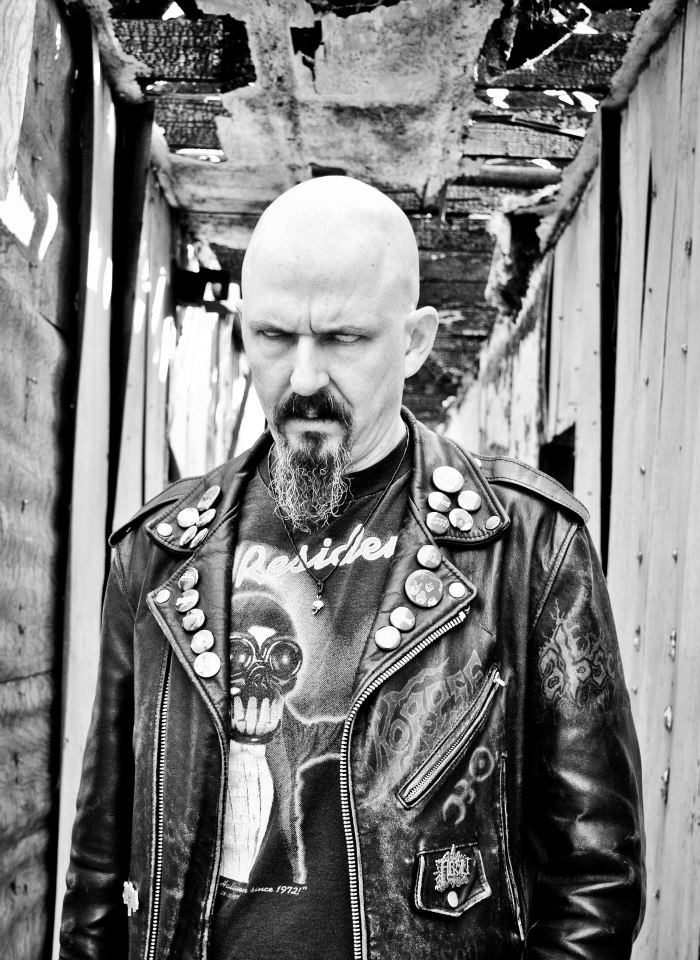
Ashes, Organs, Blood and Crypts has just been released. How do you feel about it?
Yeah, it’s brand new! We’re really happy about it, otherwise we wouldn’t have put it out, it would have just not come out [laughs]. So yeah, we’re really happy with it. It’s going over really good so far, we keep waiting for people to hate it, but they seem to like it so far. We’re kind of wondering what we did wrong because there are usually a lot more people that don’t understand and don’t want to like it. But we’re super happy, so far it’s going great.
Do you still have a lot of people complaining about your new material? Didn’t it get better?
Not so much these days, but there’s always someone that has to say, “Oh, I only like Severed Survival and Mental Funeral,” which is fine. If you want to live in ‘89 or ‘91, that’s fine, we can’t really help you with that, but we’re not. It’s 2023, now. We have to be moving on!
Morbidity Triumphant was released just one year ago. It’s always been like that: you’re a very productive band and you tend to release a bunch of albums in a row. How come, according to you? You just get on a roll?
Yeah, exactly. There’s no real reason for it except that we were feeling creative and wanted to do it. We don’t have to make records at all, you know. Peaceville records don’t tell us what to do, when to do it, or how to do it. They’re just always receptive when we say, “Hey, we’re ready to make a new album!” Then they say it’s great, but we’re not under contract to be on any kind of schedule with them, which is really nice. We can just go with our moods. So it’s really it, it’s just a matter of feeling creative, feeling like we have something to say, and feeling like we know how to say it. We didn’t have to make it, so anytime we do something, whether it’s a record or playing a show, it’s because we feel like doing it. No one’s forcing us against our will. It felt like the right time to go for it, so here we are!
There were seven years between Skull Grinder and Morbidity Triumphant though—how come?
Well, we have to take away two years because of the pandemic, during which basically no one on planet Earth really got to do much of anything. But otherwise, we’ve been really busy. The only thing we haven’t done since Tourniquets, Hacksaws and Graves is a recording that’s 40 minutes long. We did Skull Grinder, though, we did Puncturing the Grotesque, we had a rerelease of our demos come out, we did a live album, we traveled all over the place, in different countries, to play shows… We’ve really been quite busy. Besides the two years of pandemic, we haven’t had a year of silence, we’ve always been doing something, whether it’s a 40-minute release or a 27-minute one… All things at the right time! And this was the right time for a new one.
How do you guys work, actually? From the interviews I read, it seems that you always record with a certain urgency. Do you need the extra pressure of a narrow time frame?
That’s part of it. Unlike a lot of bands, we don’t have a home studio where you can just record for months or weeks without it costing anything. Recording in a professional studio is very expensive and Peaceville is not a giant label like Columbia Records or even Nuclear Blast. They’re a little more underground, I guess, so we don’t have massive budgets where we can record for weeks or months like that. It’s never been that way with us; we have to get in and do it fast. So we get our budget and then we use the time—although this time we actually finished under budget, I think we got it done way faster than we had to. At some point, we were just finished: “No need to do anything else!” But there is pressure just because we don’t have an endless amount of time to record. The one thing we cannot do is fail and not finish in the time that we have, so we just have to give ourselves a deadline and stick to it and make sure that we get everything done. Fortunately, we’ve been doing this long enough to where that’s not a problem. We know what we’re capable of doing in a certain amount of time. So it’s a little bit stressful and urgent, but not in a bad way. It just forces us to get our shit together and get it done. It makes us go.
I suppose you rehearse a lot before entering the studio, but before that, how do you guys write? Is it something you do together or does someone take the lead?
We do it separately. I mean, there’s not a lot to it, it’s very simple. All four of us write, so it’s just a matter of… Let’s just say I wrote a song on guitar at home: I just write the song, make sure it sounds good, wait until it’s finished, and then send a recording of it to everybody else so they can listen to it. Then we get into the rehearsal room and everyone learns the song. Everyone does it the same way: if Eric [Cutler, guitar] or Danny [Coralles, guitar] or Greg [Wilkinson, bass] wrote a song, he just goes, “Here’s my new song, let’s learn it!” It’s really that simple, there’s nothing else to it. There’s no secret formula or anything like that. Just write it, rehearse it, and you’re right, we rehearse a lot before going into the studio because we can’t get into the studio and waste time trying to remember how a song goes or take a whole day just trying to get something down because we didn’t rehearse it enough, so we go in very well prepared, and ready to not waste time.
You’ve worked with Scott Evans and your bass player Greg Wilkinson for the production of this album after working with Adam Munoz for a while—since the reformation of the band [in 2009], I think. How come?
We just wanted to try something different. We still love Adam and we’ll probably work with him again someday. We have no problem with him, he’s always been great and we’ve been working with him for a very long time. But sometimes you just ask yourself, “What if we tried something different? What would happen? What would it be like?” Just to see. We knew what to expect from Greg because he has his own recording studio and that’s what he does for his career besides playing in a band. And we’d worked with him before; I’d worked with him a bunch of times for different projects and knew exactly what it was going to be like. But we did try a new studio called Sharkbite which we’d never been to before. Greg recommended it when we told him we were thinking about trying something different. He just said he knew this cool place, and we thought, “Let’s just go there.” We trusted his judgment, and it was cool.
It was really just a matter of trying something different just to see what would happen. That was really it, and it turned out to be a successful experiment. It was just shaking up the formula, just not doing it exactly the same as every other time. Nothing really changed, it was just different: different location, different recording room, different engineer—well, one different engineer and that was Scott—but it didn’t change the way that we think or work or record or operate, all those things were the same. Every studio has a different sound to it because of the room you record in or the mixing board… Not two are alike. But as far as our part, like how we played and the way we do things, none of that was different at all.
You guys don’t play to a metronome, there’s something very human and organic about your music that fits really fits—and actually highlights—your “body horror” aesthetics. Was it always the only way to go for you, was it a deliberate choice?
We record the same way that we recorded since the ‘80s. We’ve never used anything like metronomes or click tracks or scratch tracks or any of those things that a lot of bands like to use; we don’t do that. We just go in and record it just like we would in a rehearsal room, only we get to overdub vocals, guitar solos, and things like that after the rhythms are done. But I don’t know why anyone needs anything else. I just figure, “Fuck, you’re a band, you know how to play on stage, you know how to play in a rehearsal room, why do you need that in the studio?” But that’s just the way that we think. The cool thing about having a band is you can do things exactly how you want. We just like to do it the same way we always have, we just don’t see the need to change it.
The rhythm guitar, drums, and bass are all recorded live, and then if there’s a little mistake on the guitars you can fix that, it’s not really worth recording the drums all over against for every little guitar mistake. The studio’s great, you can fix little things that need to be fixed—if Greg wants to rerecord his bass line all the way from the beginning, you can do that, for instance. But yeah, as far as the rhythm goes, it’s the four of us in the same room playing the song, looking at each other and trying not to make mistakes.
There’s definitely a tendency in death metal to be very cold, sleek, and technically perfect, inhuman in a way. How do you feel about that?
That’s for other bands to do, not us [laughs]! You know, sometimes I hear a record and I even wonder: “Is that real people? Is that a real drummer or is that a drum machine?” I can’t even tell. That’s cool for other bands, that’s great if that’s how they want to do it. But we have a more rock’n’roll kind of approach where it sounds like real people. If you listen to my drums, there’s no way that’s a robot, you can tell. It’s not always perfect: I can’t be perfect because I am a human. I don’t worry about it. If it’s a little on the crazy side, that’s how I like it. We like to have a warmth about our sound instead of something just cold and clinical and calculated and overly perfect where you know nothing is going to go wrong throughout the whole album. With ours, you might think it goes one way… And then it doesn’t [laughs]. Just real rock’n’roll heavy metal!
The artwork was once again made by Wes Benscoter. You’ve worked with him for a while now. How did this collaboration start?
We did a new album when we got back together, it was our first full-length after reforming, and of course, you have to find a good artist to use for your album cover. So as I’ve done before, I just looked at my record collection, and I had several albums from other bands that he had done covers for, and so then it was just a matter of going, “Oh, I bet you can do something for us!” So I found his email address, reached out to him, got in touch, and he was receptive to working with us. We’ve worked with him a good handful of times since then. It’s super easy. We don’t have to tell him very much. I don’t know how he works with other bands, but for us, we just give him maybe an album title, maybe a couple of song titles, maybe some lyrics, which he will immediately ignore or pay no attention to; I might tell him, “Hey, I was thinking about this,” and kind of describe a scene, and he’ll ignore that too [laughs]. He’ll just do what he’s going to do, and we’ll look at it and say, “Fuck, yes, that’s great! We didn’t have to really tell you anything.” We don’t suggest anything, or maybe something very small like, “Hey, put an open sore on this person’s back!” or some shit like that [chuckles], but otherwise, it’s 98% his imagination. He already knows what he’s doing. He’s good at it so it’s fantastic, we don’t have to struggle to make it look cool since what he came up with is already cool.

Do you think that by now, he kind of embodies Autopsy’s aesthetics better than anyone else could?
I mean, we’ve worked with him more than any other artists. But it doesn’t mean that we won’t use someone else in the future just for the same reason I mentioned about the recording: sometimes, you want to do something different instead of having a formula, a pattern, the same thing every time all the time. We have used other artists too in recent years, we’ve worked with Matt Cavotta a couple times, with Dennis Dread… Lots of Wes, though! I can’t say what the future is going to be like, but we love his stuff. I could absolutely see us working with him again, but next time it’s time to make an album we’ll decide how we want to go about it.
To talk about an even longer-lasting collaboration: you’ve been on Peaceville since the beginning, I think that you were one of their first bands. How was it to grow up with them, in a way?
We signed with them in 1988—Eric and I were both 18 years old at the time, pretty crazy [laughs]—, and we’re still with them, so it must be pretty good! We did kind of grow up at the same time. Their label started in 1987, and when we signed with them, they weren’t even a metal label yet. It was mostly punk and crust and stuff like that, and they started slowly getting metal in there. I don’t know if we were the first metal band they had but we’re pretty early on. They just kind of transformed into a mostly metal label since then, with a few exceptions here and there. It’s pretty amazing that it’s been so long, you know, if I stop to think about it.
Autopsy has been going on for more than 35 years now. It’s fascinating to see that you’ve figured out what the band would be about very early on and then basically stuck to your guns…
Exactly.
What do you remember of that time? What motivated you back then?
Around forming the band? I remember everything! I remember every little thing, ask away!
What was it like? As you said, you were basically teenagers…
Oh, it was great. It’s something that I always wanted to do, being in a band, ever since I was a little kid. Before there was extreme metal, there was rock; Black Sabbath was probably the heaviest thing but I grew up with Alice Cooper and Kiss and Aerosmith and AC/DC and Cheap Trick… Then later, when I was maybe 10 years old, I discovered Black Sabbath. I started to get into bands when I was 14 years old, I guess, just started playing shows and recording in recording studios when I was 16. So I got started early, even before Autopsy or anything like that. It was just always something I wanted to do. When I discovered metal, there was no looking back. I was obsessed with it, getting all the newest releases and looking for the newest heaviest fastest wildest thing, and from there on, playing that stuff was just the natural thing to do, like, “I like to listen to this, it’d be fun to play it!” This was just a progression from growing up with rock’n’roll to just always looking for the newest heaviest thing, and then playing it and making it happen.
Quite a few very influential bands (Possessed, early Death) came from this Bay Area scene you were a part of. What made it special, according to you?
The area over here? I don’t really know, I don’t have an answer. It wasn’t the only place that was good for metal, you had good places for metal all over the world, countries everywhere had their own scene. But growing up here, I can only speak for what it was like here… I don’t know! There was just a lot going on. When I was about 13-14 years old, I started going out to concerts and stuff like that. When I got old enough, maybe 14-15 years old, to go to shows with my friends, no one knew how to drive yet—we were really kids—so you had to know someone with a car that could drive. And we would be ten skinny teenagers packed in one little car just to go to a show [laughs]. We really did that, there was someone riding in the trunk of the car… It was totally hilarious, but we did it! By the time I was 15, my mom would let me just go on my own—we have a train system called BART over here, so I would take the bus to get on the train and go out to San Francisco or wherever.
There were just a lot of shows; in San Francisco alone, there was a street called Broadway and they had three clubs that had metal and punk shows on the same block, so there was always something going on. You could see Slayer and Exodus for $5—at the time Slayer still had the makeup on—or see Possessed when they only had the demo out before they had a record label… I saw W.A.S.P. before they had an album out, I don’t even know if the single was out but they already had the stage show with the blood and all that shit… There was just always something going on, lots and lots of shows, plus around 1984, I started discovering fanzines, and that was an eye-opener. It wasn’t like Circus or Hit Parader Magazine, it was underground, black and white homemade ones through which you could discover even more bands from all over the world, from every country you could think of. So, yeah: there was just a lot going on and I loved all of it. I tried to be there for it as much as possible. I mean, shit: you could just go and see Venom and Slayer and Possessed play together, I saw Mercyful Fate when Don’t Break the Oath came out… Endless things like that. There were just so many, I can’t think of it all right now. As for why all that was happening? People thought it was cool, I guess! That’s really all I can think of.
It does sound cool. Incredible lineups, and for $5 at that!
Yeah, I know. I wish it was still like that!
I suppose your life is very different now: are you still motivated by the same things? Do you still feel about music how you did back then?
Yeah! Otherwise, there’d be no point in doing this, I would have figured out something else to do with my life, but I don’t really have anything else that I’m good at. Just speaking for myself, I’m not good at anything else I can think of. I don’t really have a lot of other interests: I don’t care about cars, I don’t care about computers or technology, I definitely don’t give a fuck about sports [laughs], the things that most people like just don’t interest me. I’ve just been kind of fixated on music. I mean, even if I wasn’t in a band, I would just listen to music all the time, which I do anyways. It’s just a reason to wake up and make plans and do something fun, so I still feel the same way about it. We’re certainly not getting rich and famous, we’re not trying to be the next big rock stars or anything like that. So the only reason to do it is because you like to do it. And we like to do it.
On the other hand, the music industry changed a lot too, especially when it comes to extreme metal. You were talking about the time of fanzines and underground tape trading, nowadays it’s about streaming sites and social media. How do you feel about that? Does it impact your work in any way?
As a music fan, it’s the same for me because I don’t stream music—I don’t even own a computer, which is funny; everything I do band-business-wise is all on my phone, which I guess is sort of common these days. So I don’t even have a way to listen to music on the Internet, it wouldn’t sound good through my little phone speaker. I just really like vinyl and CDs, something I can listen to on my home stereo or in the car. Driving around listening to an album, that’s great!
But as far as being in a band, it definitely changed, because as soon as the Internet became a thing, all of a sudden, everyone was getting all the music for free, no matter how much it cost to the record labels and the bands to make. All of a sudden, everyone is just streaming for free or listening to music on YouTube or something like that, and all of a sudden, everyone wants everything for free, and right now. No one wants to wait for anything, and now we’re living in a world where people expect everything right now. No one really has patience for anything. But the cool thing is that it took years, but now bands are actually getting paid for streaming—finally, because otherwise you just get ripped off. Everyone getting their music for free when it’s not free to create was kind of fucked up… So that’s been changed, artists are actually getting paid for streaming now which is nice, but people still find ways to get their shit for free and there’s not a whole lot you can do about that.
Otherwise, I don’t know how much is different besides extreme music being more… I don’t want to say it’s accessible, but more well-known, so you can get better shows and stuff like that. We don’t have to play shows for ten of our friends anymore like we used to [laughs]. That used to be a normal thing, like, “Hey, here’s ten friends coming to our show, cool, I wish more people were here but they’re not!” So things are much better nowadays, we can get really cool shows and festivals, things like that. So, you know, there’s the good and the bad, but the good definitely outweighs the bad and makes it all worthwhile. I mean, we haven’t hit a point where we get so frustrated we give up or anything like that, and I don’t think we will. So far, the positives definitely outweigh the negatives. It’s enough to keep us going and keep us excited.
You just mentioned that you still buy CDs and vinyls…
Oh yeah, all the time!
But do you still discover music in the same way or did this change?
I try to. A lot of it is just keeping up with bands that I love, that I’ve been into forever. I still get excited when I hear a new album from Voivod or Raven or Overkill or Cirith Ungol, or stuff I like from way back when, like, “Oh my god a new Alice Cooper! A new Rolling Stones! That’s fucking great!” So I keep up with all those things as much as I can, I don’t want to miss out on anything cool. The only difference now is that I hear about things on the Internet: I’ll discover something new is coming out and if I can’t find it at the record store, I’ll order the physical copy online. If that’s what it takes to get it, I have no problem doing that—it just shows up at your house and it’s great.
In the pre-Internet days, you had to work harder to find new stuff: read about it in a magazine, which means that you’d have to actually buy that magazine to find out about it, or if your friend had that magazine you could read it… The biggest thing was just going to the record store and looking around, which is still fun. You just never know what you’re going to see, but that was always exciting. I used to buy albums not knowing what it was all the time, just going to the record store and picking up something because I thought, “Oh, the album cover looks cool, that looks good, good band name”—then I flipped it around—“Oh, there’s a band photo, they look pretty cool. And there’s the song titles, they’re cool…” And here’s the big one: “No keyboard player. Perfect!” [laughs] Usually, when I see there’s a keyboard player on an album, I put it right back: “Nope, not for me!” That was the way you discovered music. A big one was your friends who’d just tell you, “Oh my god, have you heard of this band called Mercyful Fate?” Shit like that. But I still like to just go to record stores and look around and see what catches my eye, whether it’s something old or new. I never get tired of it. And obviously, I’m always thinking that I don’t have room for more records in my house, but guess what? I just bought five more!

Since the beginning, you borrow elements from doom, punk, thrash… It seems that the borders between genres are much more defined now than they were in the ‘80s. Do you have this impression as well?
I guess so. I mean, yeah, because now, there’s a name for every genre or subgenre. I don’t have to tell you about that, you know; there’s just so many. Back in the earlier days, it was just metal, heavy metal. Even when death metal first started coming out, it wasn’t widely known as death metal, it was just fucking metal. You’d describe it to your friends more than you would call it something. Instead of saying, “Hey, I’ve got that death metal album,” you would say, “This album is heavy, it’s so fast and brutal and killer to listen to.” It was more descriptive. Now, you have to say, “I’ve got an album by this band that plays funeral doom” or some shit like that. There are all these categories: if that helps you find something that you like, that’s fine, no problem, but sometimes I miss the simplicity of, “That’s just a metal record that’s fast,” or, “It’s heavy,” or whatever. But it’s okay, I already lived through all that, I’m not afraid of the present or the future so it doesn’t bother me. I just feel like if an album is cool, I want to listen to it no matter what it’s called and what the category is. I don’t really think about that too much. It’s just cool to listen to, therefore I like it.
Except for the bassist spot, Autopsy’s line-up has been very steady, which is impressive considering that you’ve been at it for 35 years. How do you explain that? How is it to play with these guys, Eric and Danny?
It’s still cool, otherwise, we wouldn’t do it. It’s that simple. If we didn’t want to be in the same room together, we just wouldn’t, and we did have a 15-year break from Autopsy, because we just didn’t want to do it. But then we got back together and 14 years have gone by, so it’s already a long time again. There’s no explanation except that we still like each other, we’re still friends, we still like playing music together. That’s really that simple—it’s not like we’re going to a therapist to try and figure out our problems or why we would possibly want to hang out together [chuckles]. We still like to go to shows together sometimes if everyone’s available and have fun when we hang out… There’s really no explanation that I can think of except that we still enjoy making stuff together. It’s fun.
How did the way you work together evolve through the years? I guess knowing each other so well helps to be efficient in the studio?
Everything’s still pretty much the same. The only thing that we don’t really do these days is this: when we first started, we would sit down together—Eric and I would—and maybe write some songs together. For instance, he would have a guitar part and I might have one to add on and we would make a song together. We did that a good handful of times in the early days. But the only difference now is that we’re not teenagers with all the time in the world on our hands anymore, with maybe no jobs or families or anything like that; now some of us have kids—adult kids in my case—and we don’t have days or hours to spend just hanging out watching movies together. We used to have, you know, zero responsibilities [laughs], so we could hang out all the time and watch movies and listen to records and maybe work on guitar stuff together. But otherwise, everything’s the same, the way our brains work, our songwriting and all… Absolutely nothing has changed since the first day.
On the other hand, you changed bass players a bunch of times. You’ve worked with Greg on the last two albums. What did he bring to the band, according to you?
Well, he’s a fantastic bass player, which is good; you want to have someone that’s a good player. But he’s also a really cool person, he’s easy to work with and fun to be around. He’s got a stupid sense of humor just like we do. None of us are overly mature [laughs], we laugh about dumb shit all the time. That’s important. You could have someone who’s the greatest bass player on Earth, but is an asshole and no fun to be around, or has no sense of humor, or is a pain in the ass to travel with. That’s not worth it. But fortunately, Greg is a great player and he’s cool. And we’ve traveled with him a bunch of times now, so now we know he’s good to travel with. Because sometimes, you think you know somebody, and then you end up in France or Germany or wherever, and you’re like, “Oh, I see you’re like this [laughs]. I thought I knew you a little better.” But once you get out there, you really get to know people even better, and Greg’s been great. He’s been fun to travel with, he’s great on stage… All I can say is good things about him.
This doesn’t have anything to do with anything but a while back, you contributed some vocals for a Teitanblood song, “Burning in Damnation Fires”, from the album Death, which I really like. How did that come to be?
I got in touch with Nasko from Teitanblood… I don’t even remember how. Maybe he sent me an email or something? I honestly forget how we got in touch. Just somehow, through emails or something, we got to be like, email friends, and he just asked if I wanted to do some guest vocals and I said, “Yeah, that sounds great.” So that was cool. He’s a super cool guy. A long time can go by without us being in touch and all of a sudden, I hear from him out of nowhere. For instance, at one point, he called or emailed just to say, “Hey, I’m in San Francisco and a friend gave me tickets to see Slayer and Suicidal Tendencies. Do you want to go?” I said, “Yeah, cool, man!” So I met up with him and we went to see Slayer and Suicidal Tendencies together. He kind of just shows up at random times and it’s been a long time, so I’d like to hear from him again someday, but it was just one of those things. He just showed up and asked if I wanted to do that and I said, “Hell yeah, that sounds like a lot of fun!” And we did it.
Autopsy has influenced generations of younger bands now, not just in death metal or death-doom, but in black metal and other genres as well. How do you feel about that? Did it change the way you think of your own music?
No, not at all. Honestly, anytime someone likes our stuff for any reason, it’s great. That’s not why you start a band, we didn’t start the band to be liked or appreciated, but if you say you don’t care about that, you’re lying [laughs]. If everyone hates your band and thinks you suck, you’re going to be disappointed and think, “Oh man, no one likes us, that sucks.” At the same time, we never tried to cater to anybody or make music to be liked or appreciated, we don’t do that either. But if enough people like it, it’s a great feeling. Anyone in a band, if they’re being halfway honest, will admit that. “Oh, you like our music? Fuck yeah, that’s great. That’s awesome.” We don’t think about being influential, though. It’s not our job to say, “Look, we’re influential! You should be grateful to us for gifting our music!” [laughs] It’s not like that at all. Our job is to make a record, Peaceville’s job is to put it out, then it’s out of our hands, and people can say whatever they want, whether it’s “Autopsy sucks,” or “Autopsy’s great,” or “I think they’re okay.”
If you take some sort of influence from us, that’s cool. We had our own influences when we started, plenty of them, so we’re just kind of a link in the chain, you know what I mean? There are bands before us and there are bands after us. We’re in the mix like everybody else. It’s up to other people to say what our role in the big picture or history is. That’s not for us to say. That’s not something we can say. All we can do is: “Here’s our album, what do you think?” And that’s it [laughs]. The rest is for other people to talk about on the Internet and comment boards, because people love going on the internet, and they love posting on comment boards every fucking waking thought, including what they had for breakfast. But yeah, we make that happen and then our job is done and we’re probably already working on the next thing.
I’ve read an interview where you said that making records is like having kids: they don’t go away, you have to take good care of them. How do you take care of such a legacy?
Well, the main thing is just making good kids to begin with, not little shitheads that are going to end up in jail or something like that [laughs]. That’s pretty much it. I think I said that because someone probably asked, “What’s your favorite album or your favorite song that you did?” Because it’s like you can’t say what your favorite child is, otherwise your other kids are going to fucking hate you. It’s just like that. We will never put out an album that we don’t feel strongly about, so I always have the same answer for anytime someone asks me about my favorite album I’ve done: I always say the newest one. It’s got to be the newest one, because if you make a new album but tell yourself, “This is good, but the last one was way better,” then why would you?… It means that you fucked up, you blew it. You had the opportunity and you blew it, you put out something substandard. That’s why we always have to feel like the latest album is the best one we could possibly make. And that’s the kind of mindset that makes it work, otherwise you start living in the past, and that’s not interesting at all. The past has already happened, so you gotta keep moving on and make your best stuff today.
In that respect, when you create a new album, is the fact that it has to be on par with your classics at the back of your mind or not at all?
It’s got to be better. The newest album should always be the best one. Like I said, there’s going to be people that don’t want to get past Mental Funeral, it stops there for them, and that’s fine. If you like those albums, we’re happy about that, it means that they’ve survived the test of time and that’s fantastic. But I don’t know, we need to keep it interesting and do something new, we don’t want to be a band that just lives in the past or is a nostalgia act or something like that. That’s why when we got back together, it was important to not just play shows where we represented the past. We made a very deliberate decision to come up with new material to say, “Hey, we’re not just trying to live in the old days, here’s what we’re up to now.” And hopefully, that keeps it alive and exciting.
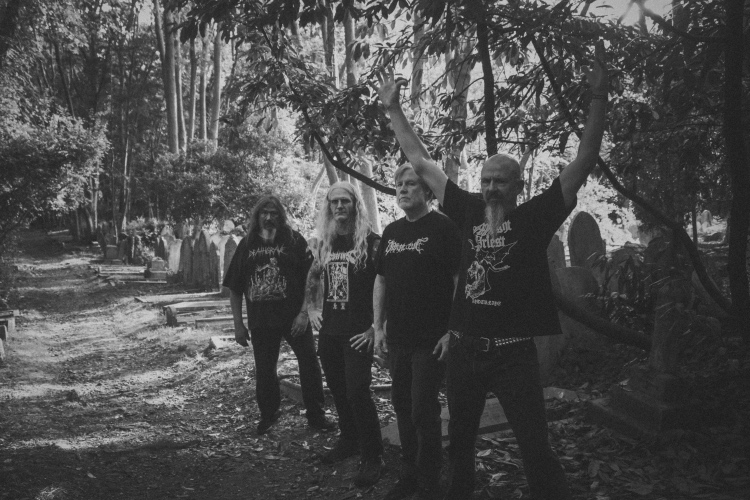
There’s a lot of excess and gallows humor in Autopsy, and yet you’re obviously very serious and committed to your music. It’s not that many bands or musicians that succeed at taking their art seriously without taking themselves too seriously as well. How do you pull this off?
Oh, I don’t know. It’s just that we don’t take ourselves seriously as human beings. Like I said, our senses of humor are really stupid, we still laugh about the dumbest shit. Sometimes I think, “God, what am I, 14 years old?” [laughs] I still laugh at farts and shit like that. I can’t help it. But when it comes to music, it’s a different thing. We’re not a joke band, we take Autopsy very seriously. Let’s say lyrically, there might be something, but it’s never jokey or trying to make people laugh. We don’t want that at all. When it comes to our music or lyrics, we take it very seriously, but… Let’s put it this way: we don’t take ourselves black metal-seriously, like, “Laughter is not allowed.” It just doesn’t sound like much fun at all. But we treat Autopsy very seriously. You know, we don’t take it for granted. It would be really easy to fuck it up if we didn’t take it seriously, kind of making fun of it or something. Musically, we’re not going to do that. We want to rip your head off and kick it down the street.
When it comes to the lyrics, actually, how do you approach the writing?
It’s just a matter of trying not to use the same ideas over and over again. It’s really all there is. I’m just trying to keep it interesting and creative, and not do the same thing. I’m not going to do Severed Survival 2: the Sequel or something like that, because that means you’re out of ideas. I still have lots of ideas, that’s fun. So many things have been done lyrically, not just with Autopsy but with other bands, that it’s a good challenge for the brain to come up with new things all the time. I don’t really write about horror movies or anything—we did that a little bit in the very early days, not too much, just a little bit. Now, I strictly write things that I made up in my mind, little stories or just little bits of horror or grossness, things meant to make you feel unsettled, or maybe just think, “Why would you write about that? That’s fucked up!” It’s how my brain works [laughs].
It’s a good challenge to not repeat things. And it is a challenge because now there are resources: if you’re going to name your album something, you don’t want it to be called the same thing as anything else, otherwise it won’t be unique. So now I do research, look for things on the Metal Archives website—a fucking super cool website, you can just look at shit for hours and get lost in it, like “Oh, this person is in this band” and so on—to make sure that I’m not using album or song titles that anyone else has used. Or even just use Google: “Ashes, Organs, Blood and Crypts, nobody uses it, so let’s use that!” Sometimes, you’ll think of something that you think no one has thought of, you search for it, and then it turns out fifteen bands have used it. In the early days, before that, bands would just call themselves something, and then next thing you know, there are ten bands called Mayhem, or everyone has a song called “Raise the Dead”, “Sacrifice” or something like that. No one had any way of knowing. So it’s frustrating sometimes because it becomes harder to come up with unique, individual things, but if you try hard enough and use your brain, it’s surprising what you can come up with! And then it feels great: “I came up with this cool thing that no one thought about before!” It’s a good feeling when it works out.
You have a couple of gigs planned for next year [2024], in Mexico and in the US. What about Europe?
Actually, we don’t have Mexico yet. We do have one in Texas in March, a really good one called Hell’s Heroes, and we are playing in the Czech Republic in July at the Obscene Extreme Fest. We’ve actually never been to the Czech Republic before, and it sounds like a pretty crazy festival from what we’ve been told about it and seen on YouTube, it seems pretty wild. That’ll be fun. We’ve got a couple other things that we’re working on but have not announced yet. We don’t do a whole lot of shows, we don’t do tours where you’re on the bus for weeks, that sort of thing, but I don’t know what else is coming up next year yet. It’s a work in progress right now. We’re sort of slowly piecing it together, we’ll see what turns out. I’m sure we’ll probably surprise ourselves a couple of times.
How do you approach these gigs? How important is playing live to you?
It’s part of the package. We don’t have to do it, we do it because we choose to. We do turn down a lot of things because not everything is feasible. What some people want and expect is just not realistic. Fortunately enough, cool opportunities do come up: we just accept offers that are cool and doable for us and turn down the ones that are not. It is important to get out there, though. It’s good to play this stuff on stage and meet people who like your music, that’s great. I love meeting people that support us and seeing other bands… We did play Mexico this year and it was like a family reunion. We were hanging out with the Immolation guys that we’ve known forever, King Fowley from Deceased crashed our fucking dressing room tent being a crazy person like King does, it was great, and then we’ve seen the Paradise Lost guys that we hadn’t seen since we’d toured with them in 1990… I love stuff like that, like seeing your old friends, and just fans who made your band what it is, because without the fans, we wouldn’t do it. No one probably would, there would be no point. Someone’s got to pour gas on the fire and they do that.
In those ways, it is important; I just wish that the traveling part wasn’t so difficult [laughs]. The flights are really, really long and hard to deal with, especially because—not to be complaining or making excuses—we’re here in California, the West Coast. So if we’re to fly anywhere to Europe, we have to fly all across the fucking United States, which is huge, so that’s almost a day gone right there, then we have to fly across the ocean, and then we have to go to wherever it is we’re supposed to go. It’s very long and really hard to do; that part sucks. But once you get somewhere cool, get to rest a little bit, and are over your jet lag, then it’s great. You can check out different places, maybe even have a tourist day if you get lucky, which is pretty rare, but once in a while, we get to do that. It can be pretty fun when you get there, but the traveling part really sucks.
Okay, and what’s next for you guys? Are you on to the next album already?
Not yet, but we do want to make a new one next year. I don’t think we’re going to hurry ourselves as much, we’ll probably try something different, like book the studio time after the album has been written instead of before. We’ve done that the last two times, we booked the studio time when we weren’t even finished writing it yet, so we had to hurry up and do it. So we’re talking about taking it a little bit easier, but we’ll see. We also get restless and then all of a sudden we feel like, “I wanna do something now!” So, I don’t know. Your guess is as good as mine. I don’t really know what’s going to happen next year, and that’s completely fine because that means surprises and we like surprises!
All Autopsy releases are on Peaceville’s Bandcamp. For news about the band, check here and there.
 Chaosphonia