Linnéa Olsson has more than one string to her bow. First a music journalist, she then made a name for herself as a guitar player in bands such as Sonic Ritual, The Oath, and Grave Pleasures, before finding her own voice and founding Maggot Heart. With Uno Bruniusson on drums and Olivia Airey on bass, the band forged its own style, a blend of punk ethics and rock’n’roll spirit with a dash of sharpness and dissonance, attuned to the pulse of the city and the night, from the gutter to the stars. Hunger, their third album, is both their most vulnerable and most confident record so far. Throughout its eight songs, Linnéa’s strongest talents shine: aiming high and letting go.
In this interview that took place a few months after Hunger‘s release, she went over the unique path that took her from the Swedish metal scene to Berlin. A hunter more than a prey, lucid and open-hearted, she talked about her doubts and goals, and about finding strength in fragility, and vice-versa.
This interview took place in February 2024 and was first published on Radio Metal.

Hunger was released a few months ago. How do you feel about both the record and its reception now?
I’ve gone through some sort of personal transformation with the making of this record and since the record was made, so it feels like it’s been out for a very long time already. In some ways, Hunger really took like a lot out of me. In the past, when we’ve done albums, I would be living with it for a long time afterward, but now, this time, maybe I wanted to put a little bit of distance between myself and the record. Last year was super trying for me; I had some health issues, I was coming back from an injury, and the whole process of making the record and preparing for the release was so intense that once it was done, I almost didn’t have any energy to tour. I thought, “I don’t know if I can do this.” It’s only now that I feel like I’ve gained a little bit of energy back, which is kind of crazy [chuckles]: I’ve put so much time into preparing for something that I just burned myself out. I did all of the work before and I wasn’t really prepared for the work that was gonna come. So in a way, it’s a little bit weird.
But in terms of material, I think that it’s our best record and I’m really happy that it was so well received. Overall, I’m really proud of it. I think that it’s really important to try to evolve as an artist—my biggest fear is to repeat myself over and over again—and I think I managed to do something a little bit new on Hunger. It’s not a super radical style change or anything like that, but I was able to challenge myself and I’m really proud about that.
Hunger took longer to make than your previous albums, which I guess has something to do with what you’re talking about…
I had some sort of spiritual crisis I guess, where I would start writing something and then would just think, “Oh, but I’ve already used this before…” Maybe as a writer, you feel the same. In that sense, it took a little bit longer, it wasn’t just like throwing riffs out of the bag. Some of the songs I had worked on a little bit here and there over a really long time, and I just didn’t feel super inspired in general. Sometimes I find that difficult: I have long stretches of writer’s block where I don’t really do much, where I struggle to find the energy and the creativity, and then I have very concentrated spurs of creativity where I gain momentum… It comes and goes.
I was depressed for a good chunk of that year. It was really difficult to come back as a band after the pandemic. I still feel kind of stuck in that COVID-19 period, mentally. It was very difficult to get back into the groove. As a band, everything became more difficult: there are fewer people out but everything is costing more… Boring shit like that, you know? And then on top of that, I developed social anxiety, and being on stage became very difficult as well—I got some sort of new stage fright that I haven’t really had before [chuckles]… It’s silly because it’s just a small rock band and there are more important things in the world, but it was quite difficult for me, actually. I think it was just a confusing time, it didn’t feel very peppy or inspiring. In the middle of that, I had phases where I tried to work on the songs and then finally, at the end of 2022, it started taking shape. We made the album at the beginning of 2023.
Mercy Machine was released at the beginning of the pandemic, right?
Yeah, it came right after COVID hit—in the summer of 2020, so actually a few months after.
A weird and uncomfortable moment…
Yeah. I think I got like a little bit too comfortable sitting at home. I like my solitude and I think we got too much of that, basically: you forget what it’s like to be around people, to tour, things like that.
It’s almost surprising to hear that you struggled so much because, in my opinion, there’s a striking sense of confidence in Hunger…
Yeah [chuckles]. I think that a lot of my songs are bordering on being extremely confident, but at the same time, there’s a lot of sadness and vulnerability in them. At least that’s how I see it. Sometimes, the songwriting process feels like my way of working my way through the confusion of how I feel, and maybe convincing myself in a certain way? Several songs start off quite fragile and then move towards a very powerful and confident climax. For me, those feelings are not mutually exclusive, they can coexist very well. I do feel very confident in certain areas and quite fragile at the same time. It’s a bit of both.
You’ve been playing with Olivia and Uno for quite a few years now, I assume you’ve really grown together as a band. Before that, you’d had shorter experiences with The Oath and Beastmilk/Grave Pleasures: do you feel like now, you’ve found the musicians you needed to really express yourself as an artist?
Again, this is something that I hope to grow with. I can’t really tell where I will be as an artist in the coming years, but playing with people like Uno and Olivia is really beneficial for someone like me. They are true musicians, whereas I never really felt like one: I think my strength lies in songwriting, maybe. I’m not a person who could play anything on the guitar, but Uno and Olivia are incredible musicians and they really help me bring my ideas to life. They support my vision, in that sense. And they’re really good friends, it turns the band into some kind of family, almost. It’s a very strange relationship to be in a band, actually: there are some moments where you have a bit of friction, some where you’re very good with each other… They’re like a brother and a sister, to me.
At the beginning of the band, you had another guitarist play with you live, but that’s not the case anymore. Do you think the power trio is the best configuration for Maggot Heart?
In the beginning, we were experimenting a little. I think we really solidified what I wanted Maggot Heart to be when we became a trio. It really made us better; it made us better individually and it made us better as a group because there’s really nothing to hide behind when you’re only three musicians. It also gives everyone the room to showcase what they are doing in the band. But as I said earlier, I don’t really know if it will be like that forever. In some ways, I feel like this record was like the closing of a chapter. I don’t really know what the next chapter will be, but we’ve done three albums the rock’n’roll way with three members and maybe the next record will be something different. I don’t know [laughs], I haven’t really thought it through yet.

The album was released by Svart Records and Rapid Eye, your own label [founded with Ricky of Swamp Booking]. I think everything so far has been more or less self-released. Is it important for you to keep this DIY?
This has been incredibly important to me because I often felt very disillusioned and let down by the music industry. There are a lot of things there I don’t really want to be a part of. And I had tried it in a lot of different ways: I was signed to a major label, I was signed to independent labels, and it wasn’t really that much of a difference. Unless you have people there that you fully trust and that you work very well with, it’s gonna be a lot of frustration, and I just didn’t feel like doing it that way again. I think that I was a bit naive when I decided that I didn’t want to though, and maybe also a bit scared of giving this band a full push. Because you won’t experience as much failure if you don’t if you don’t risk so much, right? Looking back at it now, maybe I was also a bit scared of another failure in my career. But doing it myself has been extremely rewarding on many levels, and I think that it’s something that people who listen to my music appreciate: they know that I’m doing this myself, that the records are being sent out by me… And I have full control over my music, and full transparency over how much money I make—not that it is that much [chuckles]. But like I said, I was probably a little bit naive in terms of how much work it would be. If I’m burnt out, it’s because it’s really a ton of work to oversee everything.
How does Svart fit in that?
It’s Mat [Mc Nerney], the singer of Grave Pleasures and Beastmilk, who told me, “Maybe you should consider doing something with Svart because it’s always good to have another label in your corner and they do really good, fair deals with bands.” He worked with them himself. So we decided to do that for this record. It’s given me the possibility to have a bigger reach because they have a bigger distribution network. And they came up with some money that I just didn’t have. The problem is always the capital, I can’t really invest much which means that I can’t really make the band grow. It’s not very sexy to talk about money, but it’s definitely a big factor when it comes to DIY. I’m not against signing with the right label, it’s just that I wasn’t really interested in waiting around for people, asking them if they would please listen to my music… I just want to go ahead and do things, so that’s what I did [laughs].
Apparently, you produced the album yourselves as well…
Yeah, we did it as a band. It was a very smooth, very calm, very nice recording experience. We did the record here in Berlin, on our own backline, with a friend engineer… And it’s not like there was a ton of huge production decisions to make—they had been made in preproduction already. There was some things like the horns for instance, but that was really fun for me so I didn’t mind. Otherwise, Uno is really good at helping me with the vocals. He kind of coached me when I was doing them and helped me decide which direction to take, which takes sounded the best, stuff like that. I think a big part of the sound direction comes from the mixing, which was made by Ben [Greenberg] in New York. He gave Hunger a sound that I think is pretty cool.
You have little details here and there—horns, some piano…
Yeah, I’m just dipping my toes, you know? I think, “Oh, what about a little bit of this?” or, “Could we have a song that isn’t guitar all the time?” [laughs] Again, it’s nothing crazy, but I grew up with the Rolling Stones and I like David Bowie a lot, so having some saxophones on there wasn’t super radical to me. But it’s fun. Sometimes, you know that you want something but you don’t really know what it could be; it’s nice to be able to add a little bit of dimension to a record. And also, a record is a record, it’s not playing live. A record is the only time you have the opportunity to try something that only exists at that moment, and I feel like it would be a shame to not use that opportunity.
On the first Maggot Heart releases, there was a lot of reverb, your voice was a bit buried in there, but on Hunger, it’s very clear, like you’ve grown more confident and assertive as a singer. As far as I know, you didn’t sing in your previous bands, but were you singing before?
I used to sing in a choir when I was a kid, but I didn’t sing after that. I’d always convinced myself that I just wanted to play the guitar, that it was fine. But I think that if you’re a songwriter, you should sing your own songs. It’s a completely different experience now compared to when I started because back then, I just didn’t have the confidence or the technique. I also think that the songs are better now and I write better lyrics—everything is better now. I heard an old song the other day and thought, “Yeah, I don’t know… It’s not so good [laughs].” But that’s the charm of it. You learn as you go.
It sounds cliché, but the physical act of singing how you feel is an incredible release, it’s quite powerful. When we record, I really enjoy it. Live, it’s more difficult because there are so many words in my songs; for some reason, there’s always a million words. I’d never realized before, but now that I have to sing them all one after the other, I see how difficult it is. It’s very difficult, and I have to play at the same time, too! I can’t recommend this unless you’re very good at multitasking [chuckles].
One of the great things about it is that it really showcases the lyrics, which I think are really good on this record…
Thanks!
Were you writing before Maggot Heart? I know you were a music journalist, but it’s not the same…
I’ve been writing my whole life. That’s where I think my strength lies, maybe. I would like to develop my writing more, even writing poetry or writing prose… I’m kind of moving in that direction, at the moment. What about you? Are you an educated journalist?
Not really… I studied literature in college, but that’s it.
And do you write prose as well? Like novels or fiction?
I’m a bit shy when it comes to this—I think it’s a goal of mine. Fiction is a very powerful way to get your ideas across, but I am struggling.
I completely get that. Personally, I always felt like fiction was this completely impossible task because I think a lot of the novels that I had read were so much about having a proper narrative and character building, very classic… But when I started to read more experimental things, I realized that it’s just like music: you don’t necessarily have to craft the perfect pop song, you can make a punk song. And you can be a punk writer as well. It’s been very liberating for me actually to read certain writers, it made me realize that you can also do it like that, which is pretty cool. If you can write a good plot, great, but I don’t think I’d do a great job at that. If you can capture a feeling or do something that evokes whatever in the reader, it can be great fiction too.

There are a few references to your Scandinavian roots throughout the album. The band is based in Berlin, but you’re from Sweden, and Uno too. Did the distance change your relationship to this background?
I’ve been living in Berlin for eleven years, now. Sweden has become a distant memory, almost: I’ve been in Berlin longer than I was in Stockholm. I’m now starting to realize that when I moved away from Stockholm to Berlin, it was more to try to escape something than I was aware of back then. So I think that thinking about Scandinavia and bringing up Scandinavia is a way to try to reconnect with myself, that girl that I was. It has very bittersweet connotations for me; I have a love-hate relationship with Sweden because I feel like in certain ways, I wasn’t really accepted in the music scene where I was working and playing. Thinking back, it was pretty tough. I don’t think it was a very nurturing environment for me. So there’s some bitterness, some resentment there. Even now, when we play in Sweden, nobody gives a shit. I always wonder why is that: we have two Swedish members—it’s so fucking weird. Some really lame bands are doing great there, but we’re not. At the same time, it’s where I’m from, so I can’t just disregard it completely. But this is a work in progress, something that I will keep on digging in for my whole life as an artist, probably.
In Berlin, you found a more nurturing environment for your art?
I really think so. I use to say that in Sweden, there’s only one type of person that you meet over and over again—almost like it’s always the same person. Here, you have all kinds of people. The choice is a no-brainer if you want to set up your creative foundations: if something is supposed to grow, there has to be diversity, there have to be different types of people around. The second thing is that people are coming to Berlin specifically for this reason. And there’s also more crossover. I felt like Sweden was very, “Oh, you’re into this, so you’re into this only.” Here, people are a little bit more curious. The people that I hang out with who are into extreme music are the same people that I would go to a techno night with. In that sense, it’s been really good for me. I think staying in Sweden would have bored me to death. Are you living in Paris?
I lived there for a couple of years but now, I live in a smaller city in the Netherlands. So it’s basically the opposite move, but I can relate a little bit…
Absolutely. I’ve been here for ten years now and Berlin is very intense. Maybe I don’t need that intensity as much as I did ten years ago, I don’t think my inspiration necessarily has to come from a very intense nightlife or anything like that anymore. I feel like that part of my life is over. I would like something else. I don’t really know if I’d stay here for the rest of my life, it’s a bit strange to imagine, but overall, it’s been a very good place for me, really. It has a certain type of magic that is quite rare, I think.
Hunger is both the title and a recurring theme of the album. What does it mean for you?
I think it’s David Bowie who said that you only write the same song over and over again because you just rewrite on the same theme. I find it very true: a lot of what I write is about desire and the different shapes it takes, and it’s basically what this record is about, I think. It’s about this impossible hunt for something, and about how it can either be very good or very bad for you, depending on how you look at it. I’m not necessarily a big Buddhist, but in Buddhism, there’s this idea that desire is the root of all suffering. I think it’s something that has been very prevalent in my life: I can have a very intense drive and it can really propel me to get shit done, but it also burns me out. When I told you earlier that I somehow feel like this is the closing of an era, the end of a cycle, it’s because something has changed in me, and I feel like this kind of hunger is probably not going to be as prevalent in my life anymore. And it can take many different forms; it can be sexual hunger, it can be anything that takes you out of the moment, I guess, that gives you the relief you’re looking for.
You said somewhere that Dusk to Dusk is the mind and Mercy Machine the body. How does Hunger fit in there?
I think Hunger is the spirit. I usually work with very simple symbols, and the symbol for this record is the archer, the hunter who has a bow and an arrow. There’s something very positive in there in terms of spiritual ascent. I would think of somebody who is angling her arrow towards a goal and the arrow meeting that goal in a perfect arc… I really feel like I’ve managed to free myself from something with this album. I’m not really sure what that is yet—we can have another phone call in a couple years, I’ll know then [laughs].
I also read that this album was about frustration, which is logical: if there’s desire, there’s going to be frustration too. Does expressing it help you deal with it? Is it a cathartic experience? For me, listening to that album definitely is.
That’s great—it’s amazing. It was a really cathartic experience for me, but I think that if you are continuously creating, then the process of catharsis is going to be continuous as well, you see what I mean? I don’t know how you feel when you’re writing, there’s probably a small relief right afterward, but I think the whole process of doing it is maybe more important overall.
You’ve started to play some of these songs live—you said you were very tired, but you did do a tour in the US, right?
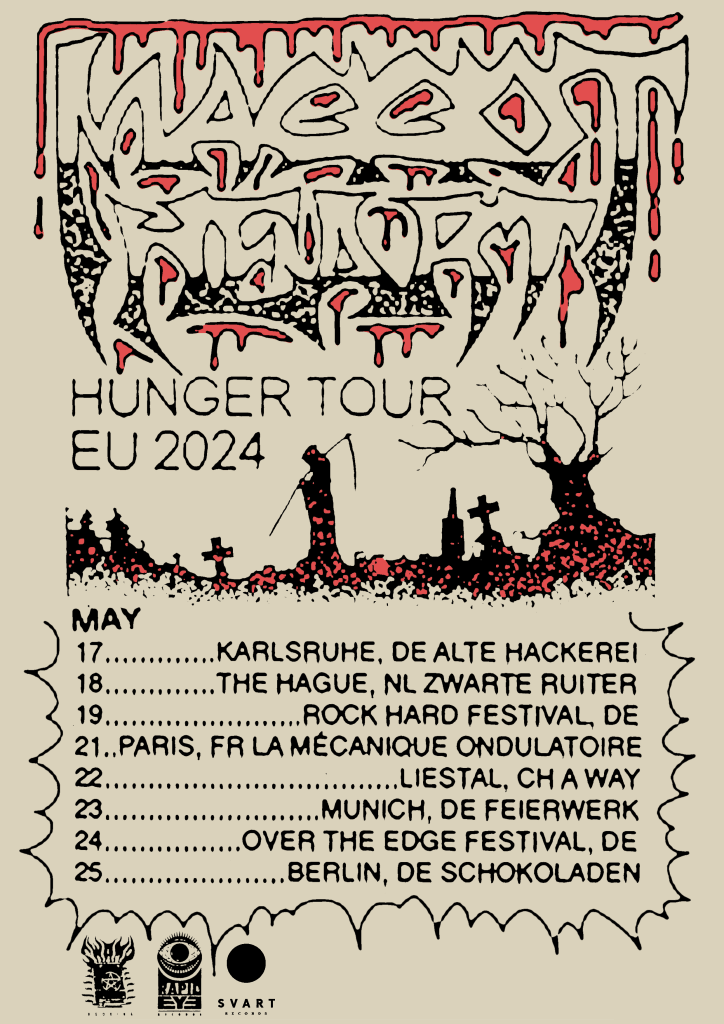
[Chuckles] I was so tired on that tour, it was really tough. We played some great shows and I’m really grateful for that, but it’s very difficult to tour—I’m just being honest here. But now I had a bit of rest, so we’re gonna do a very short tour in Europe in May, then we’ll be back in America in June for another tour.
Does the fact that you’re gonna play these songs live influence your writing?
That’s the thing: we can’t play a song like “Archer” live, we don’t have a piano player or a brass band—yet! [laughs]—because I can’t afford to pay extra musicians to go on tour with me. So no, I don’t think about that when we are writing or recording. I think that live, we’re trying to do a rock’n’roll thing, but in the studio, I can maybe do something else, whatever I want. It’s getting quite tricky to put together the live shows, it’s quite difficult to do some of these songs [chuckles]. In the beginning, when I was writing, I would write all of the instrumental, the whole song, and then I would write the vocal melodies on top. And then when I had to learn how to play it, it was very difficult because I hadn’t been thinking about how the vocals would be on top of the riffs. Now I probably think about that a little bit more; the songs are less riff- and guitar-oriented and focus a little bit more on the vocals, which makes them a bit easier to play live.
There is something raw and immediate in your music, and yet when you pay attention, there is a lot going on, it’s quite complex. How do you find the balance between straightforwardness and sophistication?
That’s a great compliment. I think that the songs should be immediate in the sense that you can pick them up immediately; in a perfect world, you should be able to know the chorus the second time it comes because you remember it from the first time around. But there are a lot of complexities in the music indeed. Especially for the simpler songs, because I think that if you have something very simple, you have to make sure there’s still something interesting that keeps you hooked underneath. So we work with very small nuances: “This Shadow” for instance has a super simple chorus, but we worked really hard on the rhythms of Uno and Olivia. It took us several weeks to get the right, exact pattern. I really envy the great songwriters who manage to keep things simple, it’s something very impressive to me.
Follow Maggot Heart here or there, and don’t miss them on their next tour!
 Chaosphonia