It is not that many bands who created a whole subgenre in one manifesto-like album: Venom with Black Metal arguably, and Bethlehem with Dark Metal for sure. The German band spawned a whole generation of DSBM musicians and influenced many others. Jürgen Bartsch, its creator, bass player, and mastermind, has been forging music from anxiety, creeping madness, and self-destruction for more than three decades now—without ever faltering, as proved by the self-titled album Bethlehem.
For its release in late 2016, I reached out to Bartsch to have a chat about the band’s longevity, its line-up changes, and this last (at the time of the interview) release. Hearty, sarcastic, and open, laughing wholeheartedly even when talking about the worst, he spoke about the history of the band and more personal matters as well: his relationship with death, which he encountered several times already, his mistakes, and his aspirations.
This interview took place in January 2017 and was first published on Radio Metal.

Bethlehem has been going on for twenty-five years, the band reached cult status a good twenty years ago, and you released eight albums already. Why call this last one Bethlehem?
Because… After this trilogy [the ‘Alexander Welt’ trilogy which includes Schatten aus der Alexander Welt (2001), Mein Weg (2004), and Hexakosioihexekontahexaphobia (2014)], the concept thing was done, we again started doing what’s the best for us I reckon. And this sounds so much like Bethlehem that it obviously had to be called Bethlehem. Because where Bethlehem is standing on, Bethlehem is in! [laughs] It’s also the band’s twenty-fifth anniversary, so we thought it would be a good idea to call it just Bethlehem. It’s just an album title that reflects what the band is standing for, a sort of statement. This is ourselves and we never were different!
If I’m not mistaken, your first demo was self-titled too, so is it some kind of ‘back to our roots’ statement?
Hum yeah, but this was done randomly back then, it was only the logo. This was a time when we honestly hadn’t thought about titles because basically it was supposed to be over after the demo, which ultimately wasn’t the case.
The record has been out for more than a month now. What has the response been like so far?
Yeah… It was a bit disappointing to be honest because usually, we polarize a lot: I’d say fifty percent of people love us, whereas the other fifty percent hate us, but this time, almost everything was pretty much positive (except for usual mags like Rock Hard who have been slaughtering us for twenty-five years now). It was very surprising, I’m not used to all these positive things! [laughs]
Do you have any clue why it’s that overwhelmingly positive this time?
No, I can’t tell you, I don’t know! Good question! [laughs] Something went wrong, but what? This is a mystery somehow, no idea. This time, people and the press liked the album. Normally, if the press likes it, people don’t and the other way around, but this time they were all walking hand in hand. A surprise! I can’t tell you why this happened.
What’s been said is that Bethlehem is your strongest effort since your mythical records from the nineties. It sure is very raw and intense. Would you agree with that?
Sure, it is, because this time, it was again done with my best friends, which always is pretty helpful in making albums: it’s more honest than stuff you do with strangers or a studio line-up. Then it’s all about explanation because my lyrics aren’t too easy to understand for people who don’t know me… But this time it wasn’t the case, so everything was much easier. And yeah, it made for a pretty intense thing to work with people I like and who like each other, who understand each other, and know the history of each person’s life very well. This was like being reborn, somehow.
That’s what I was wondering actually: your three previous albums formed a ten-year-long trilogy…
Thirteen years! Thirteen years in total, actually! It’s one of the biggest mistakes of my life. But it’s like this: if I have something in my mind, although this idea was born in the nineties already, I have to finish it. This is my German mentality, you know: what you got started has to be finished! [laughs]
But why do you think the trilogy was a mistake?
The mistake was the time, you know, it took too long. Thirteen years is too long for three albums. This was supposed to happen in five or six years, but took way too long, which was a waste of time basically because, in the meantime, more records could have been done. All the waiting, all the running after people… This was shit, you know, I wouldn’t do such a thing again, or let’s say I wouldn’t do such a thing again with the wrong people. Most of them if not all were pretty much sleepyheads, so it was a personal mistake holding on this thing, but anyway, it’s the past, it’s done, and the only thing that counts is the present, so…
Actually, the line-up changes are by now almost a part of what makes the band unique… How do you deal with that? How does it affect your way of working?
Oh, it’s a pretty refreshing thing to be honest [laughs], because then you always have different or new influences in the music. In Bethlehem, it’s like this: except for a few albums, we always have a songwriting team of usually two people who write all the songs, which is always the opportunity to have refreshing elements in the music, so it always should sound interesting at least. Although of course, things like guitar sound and stuff always stay the same. The style stays the same, but the ideas change. Always refreshing ideas. And this time, with Ilya Karzov, we have the perfect songwriter on the team who fully understands what Bethlehem is standing for because he grew up with the S.U.i.Z.i.D. album which found its way to Russia in the past via a music cassette, so he grew up with this album and definitely knows what the music is about. Although he’s not copying Bethlehem, he brings in his own, fresh ideas, which in combination with my old ideas (I unfortunately only can write Bethlehem songs) make a new mixture.

How did you pick the other musicians this time?
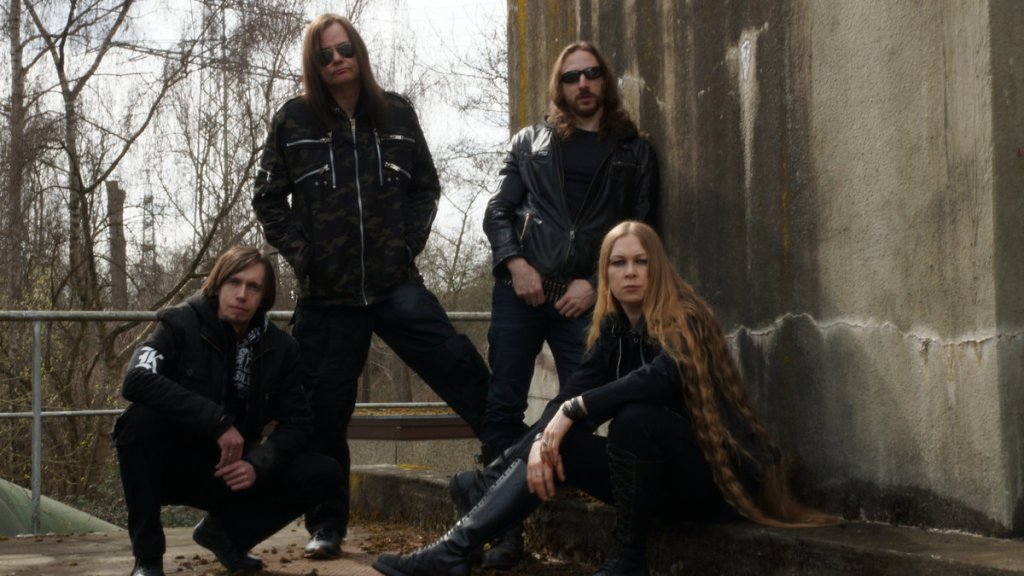
Oh, it was pretty easy: Onielar is my best friend, Steve [Wolz] is the musician who has been in Bethlehem the longest because he has played the drums in the band since 1998, he’s an old friend of mine, and Ilya, we’ve been friends for over ten years, so like I said, this time, it was a production of friends again. We haven’t let strangers in and never will. Steve unfortunately has to stop playing drums for some years because of personal reasons so he gets replaced by Torturer [Florian Klein], especially for live shows. We already toured with Torturer but it was important for us that Steve took part in the album, because it was meant to be this friendship thing. Fortunately, this could be done.
Do you actually have any tour plans maybe with this line-up?
Not yet, it’s too early. We will play live shows, but we never toured too much or played too many live shows, this is not our thing somehow. I mean, we will play several shows like we did in the past, but the long touring, this is not for us. I don’t like it, anyway. I’ve seen several bands five or six times and now they’re boring me to death already, so this is not for us… But sure, there are live plans, perhaps there is a tour, a mini tour somewhere someday, maybe in the USA also, but not too much. We never did that anyway.
Onielar’s performance on the record is astounding. What was it like to work together?
Oh [laughs]… Yes, this was a surprise for me too! This album was about surprises somehow. We hadn’t rehearsed anything together, we just did things out of the blue. I trusted her with that because I know her feelings about Bethlehem, she likes it a lot, she’s pretty much into it, she knows me personally of course, she knows what I’m writing about and all that… But she had doubts a little bit because she had never done things like Bethlehem before, but it worked out perfectly I must say. Because she just let loose. She basically was just herself. What came out of her was the truth. This was pretty much honest, she was experimenting a lot and she just expressed herself as the singer she is. In Darkened Nocturn Slaughtercult, she can’t do it this way because it’s black metal, they’re playing typical black metal where you are limited somehow, but in Bethlehem, you are not. Bethlehem is a feeling band, it’s all about feelings and emotions and definitely not about limits. So she just expressed herself and it worked very, very well! I think one can hear it on the album. She has a wider range of vocal styles, not only screaming. There’s a lot in there. And I’m sure that in the future, she will express herself a lot more. Because this woman has it all! [laughs]
So you think that you will work together again and that it can be a lasting collaboration?
Sure, it goes on! Karzov has already written the next album, which is a bit sad, you know, because I also wanna become part of it, but I can’t because since October I’m doing nothing but interviews, promotion in general, artworks, all the shit! So I no longer am free, but he is, so he’s already written the next album. But when the time comes… At the end of the month, the promotion is over. I no longer want to do this. I feel more like a journalist than a musician at the moment [laughs]. Anyway. No, it goes on, and what I can also say here is that this is my last line-up. If this line-up splits, I’m done with Bethlehem. Basically, I was already done with Bethlehem; if my friends wouldn’t have been there to tell me to continue, I wouldn’t have done this. So this is the final line-up. There are three chapters in Bethlehem: the nineties, then the concept albums, and now comes the fun. When the fun is over, then it’s done.
From the start, Bethlehem was about mixing a lot of different influences and not really having any boundaries. It’s still the case in Bethlehem where a lot of different, new elements are brought in. Is it important to you to always bring some novelty to your music and always push these boundaries?
Sure, it’s all about progression. Standing still means death or boring stuff like… I don’t want to give you any names [laughs]. Musicians don’t do that to each other because we all are brothers and sisters and colleagues. But it should always stay refreshing, plus I don’t exclusively listen to heavy metal. The last time I exclusively listened to heavy metal was when I was a teenager, in the eighties. Now, I’m an old bugger, and in the meantime, I listened to it all almost, because music shouldn’t have anything to do with limits. I’m an unlimited person, I’m open-minded about everything, and obviously, I want to express what I’m listening to, music-wise, that’s why I like mixing stuff together. Always doing the same thing or copying others would be boring, also, don’t you think so? Heavy metal should progress. This is my opinion. Always doing the same is for boring old hippies [laughs].
You did vocals on the last Cattle Decapitation record. How did that happen?
Travis Ryan, the vocalist of Cattle Decapitation, is a big Bethlehem fan with a big collection—he has stuff I had never seen before to be honest [laughs]. So, yeah. We’ve been in close contact for years and he always wanted to have my voice on their album. So he just asked me whether I could do something and, of course, I accepted, because personally, I like Cattle Decapitation a lot too. Great band!
Bethlehem is often considered the forefather of the whole DSBM genre…
Yes, we are! [laughs]
What do you think about that? You did release an album featuring Niklas Kvarforth of Shining on vocals for instance, so what are your ties to this scene?
Basically, we don’t have anything in common with that scene, but yes, we are their godfathers! Praise us, lick our feet! Eat our cocks because we are the masters of it all! [laughs]… I don’t know. Sure, this was a cool hit that some youngsters from elsewhere decided to take care of the Bethlehem principle because in the nineties, nobody was into it, basically. In the nineties, we were playing in front of ten people. People were saying: “This is shit! It’s not black metal, it’s about suicide, what kind of shit is this?” So yeah, we were lucky that somehow some kids got interested in that. This made us all very pleased and happy, to be honest. But no, we are not part of the scene and never will be. Niklas and I have been friends for ages, that’s why there was a collaboration: as I said, I work better with my friends, they understand what I want to say with my lyrics even though it’s always a problem for other people.
Apparently, you struggled with some health issues and almost died of an overdose a few years ago. How did it affect your take on life and death, which is obviously a big part of your music?
Yeah, true… Well, this was shit of course! [laughs] Because you know, it didn’t happen from one second to another. It was a process. That time, the dying thing took hours! It started on a Sunday afternoon and it took hours until I figured out it would be clever to call the emergency service [laughs]… That time, it was nearly it. I was already heart-dead when they arrived so I got reanimated in my living room—fortunately, I wasn’t brain-dead, the doctor said that a few seconds more and it would have been it. So yeah, this changed my life a bit as you can imagine because I stopped taking a lot of drugs, I basically stopped doing this. I’m not even drinking alcohol any longer. Perhaps it’s too early… Sure, when a musician dies, it’s always cool, it makes you a legend [laughs], but it’s a bit too early. But I’ll tell you something: before, I wasn’t afraid of death. I once drowned when I was a teenager in a diving accident and this also wasn’t too nice; if the oxygen influx stops from one second to the other, it sucks a lot, and it was pretty much painful. This is my fear, now: the heart attack was also pretty painful, so I hope the third time I die it won’t be that painful [laughs]. It’s what sucks the most! I mean, the moment when death is coming is cool, it’s relaxing. I had no god experience, I haven’t seen the tunnel or any Christian or religious aspect, it didn’t happen, unfortunately [laughs], but it was a very relaxed feeling, especially since this fucking pain was over. That was the best part. But yeah, it’s not too nice dying. So respect for people who kill themselves! I once read a book about it: people kill themselves with candles, burning their back, with rusty scissors, all this shit, which must be pretty brutal and painful. Respect for this, I would never do it, ever. No chance!
This is a bit of a weird question since as I can’t read German, I can’t really understand your lyrics, but they are known for being very unique. How do you write them? What are your inspirations?
It happens automatically. My biggest talent isn’t making music, it’s writing. It happens automatically: you just have to give me a white sheet of paper and a pen, and if I’m very lucky, I can write the lyrics for a whole album in an hour. It just happens. My style belongs in what is called in German the “chiffre” style, it’s hermetic because I don’t want it to become personal. I mean, it’s all personal of course, I’m writing about my life experiences, but in a way that not too many people can understand, except for people who are close to me. That’s how I do things. Perhaps people who have problems inside themselves also understand a lot of it, or let’s say can interpret a big part of it. However, people who think they are normal just think it’s bullshit. For them, it’s nonsense. In the past, I tried to explain it, but I no longer do because whether I do it or not, people think I’m nuts and that it’s nonsense [laughs], so there’s no reason for me to explain my lyrics any longer. But they’re very metaphorical, it’s a sort of code for people who are standing close to me. And that’s what I said, I don’t have to do anything, I don’t have to concentrate, it happens automatically. It’s just what’s in my mind coming out without any reason. It just happens. I mean, I read a lot of books and all that and sometimes perhaps I’m influenced by writers, I definitely am, but basically this is just myself, it’s just a form of talent. I’m very interested in the German language, too, I read a lot in German, I would not say I’m perfect with the grammar, I surely am not, but definitely much better than in English since English isn’t my native tongue, obviously. So I write in German, this is what I can do best.
Which writers influenced you the most, then, if any?
No, it’s not like that. It’s not like I have to read Goethe or Schiller for example, then try to interpret their style of writing: it just happens, and I’m glad it does! For example, with music; I listened to a lot of it in the past, so my own songs are an interpretation on a subconscious level of this music I’ve listened to, but with writing, I’m pretty much free. Like I said, I would not say it’s a hundred percent original because I’m definitely influenced by William Butler Yeats for example, I guess, but what’s coming out is pretty much myself.

There is a lot of very dark humor in what you do, which is a very efficient way of pushing a lot of boundaries. Do you feel like as a rule, metal music and metal musicians take themselves a bit too seriously?
I don’t know. I don’t take myself seriously because I just can’t [laughs], I’m a German idiot who can’t take himself too seriously. No, it’s for the art; my personal life is a bit different from what’s being presented in my art. In the past, a lot of people came to the house where I used to live and some of them were so disappointed that my mates from Bethlehem, my friends, and I were laughing all the time. This was a little bit too much for some of them, they thought we would be suicidal, always be depressed, always sitting at home… I mean, they all can be glad we weren’t because I would be afraid of hanging around people always depressed and dark, just speaking about darkness and whatnot [laughs], I don’t want to have anything to do with people like that! In Bethlehem, there’s always a lot of humor as well because life doesn’t exist with only depression, suicide and whatnot. This is one side of the medal. Fortunately, there is also another side to the medal. We all are pretty much normal. People always say we are nuts and crazy and so on, and perhaps we are, you can never know, but no, the darkness is an artistic point of view and nothing else.
A few weeks ago, you released a video for—you will have to excuse my German—“Wahn schmiedet…”
“Wahn schmiedet Sarg” which means “Mania forges coffin.” It means: “If you are too nuts, which could also be caused by too many drugs, you forge your own coffin.” It means that if you are nuts because of all the life circumstances, you will kill yourself with it. This is what the title means.
And who did the video for this song?
This was done by Morgana, a woman from Russia, the singer of Morguenstern, a Russian crossover band our guitarist is also playing in. Morgana is Ilya’s cousin. She’s doing these artistic videos in her own way, something I haven’t seen many times before if ever, so yeah, we just asked her if she would be interested in doing it for us even though it’s a low-budget production, we didn’t want to spend that much money on it and the label didn’t want to either. She did it for us; usually, she wants money for it, but for us, she agreed to not be paid a lot—it’s a friendship thing too. She really created the doll though and Onielar bought it, she has the doll at home! [laughs] We forgot to post it on our Facebook but we promised Morgana we would. Onielar bought the doll, women love dolls and I love them too; if she hadn’t bought it, I would have.
At some point in your career, you were in charge of the mixing and the production. I think it’s not the case anymore. How come?
I still am Bethlehem’s producer. Stönkfitzchen was done in my old working room which was the biggest bullshit ever done [laughs], recording in my old working room, I mean: it was too claustrophobic for the drummer, we had to build the drum kit in there which was so shitty… Anyway, usually I go to the studio, we record the music, then I work on it a little bit. This time, it wasn’t so much needed because we all worked together on the album in the studio, but I did the mixing. Everybody goes home, and I mix the album, together with the studio guy of course, and during this process, things change a lot sometimes because I have a vision, an image of how the album has to sound. It first happens when everything is recorded because I can’t explain what I want really well, so later in the mix I just do it, I produce the album. This is how I’ve been working since 1999. Before, I had no idea how to do these things so others did it, which wasn’t always very satisfying… So I learned a lot in the meantime and now I have an idea of how to do things, the technique, etc., and know how to produce albums. I think I know best how the sound has to be. Because it’s a very special sound that I want since I have this vision of it. Markus [Stock], the engineer, always says: “This would be good up here, this vision you have.”
It might be a bit personal but when I contacted you, you mentioned the fact that you used to go to Paris very often. How come? Do you have any ties with the metal scene there?
No no, this was the past! When I was a teenager, I had a girlfriend in Paris, Sandra, who was living in Stains, in the suburbia of Paris. She was from Jamaica and a lot of people from Jamaica were living there. That’s how this was connected. Then I got to know Malika from the Centre Pompidou, so every weekend I would go to Paris by train. But that was a long time ago. Unfortunately, because it has always been a pleasure being in this great city! It would be great to play there; it’s one of the last cities we never played in, which is a shame, to be honest.
What’s next for the band?
I will focus on the music again [laughs], and I think we’ll start rehearsing in the middle of the year [2017] because we’ll first have to record and write the next album. This comes first. I’m glad there’s a little break now. Our guitarist is on fire, he wants to continue [laughs]; he’s a music maniac, but I need to take a break. As you can imagine, there is also the personal life and all this, which has to become a little bit priority now after this long promotion session again, which sucks to be very honest. I love speaking with people like you, but it’s a burden! Nobody is interested in what I’m saying. It is about as interesting as the dirt under my fingernail, so who cares! In England, they call what I’m doing at the moment “waffle,” which means someone enjoying telling you a story, a long story, what comes through their mind. That’s a waffle [laughs], and that’s what I did the whole evening. I’m so much of a waffler, I could be British somehow. I can also do this: I can talk for hours without a break! [laughs]
Since this interview, Bethlehem did release another album, Lebe dich leer.
See what the band is up to here, here, or there…
 Chaosphonia
Pingback: Aluk Todolo | The Vision and the Voice part. 1 | Chaosphonia
Pingback: Jürgen Bartsch, Founder of Metal Band Bethlehem, Has Died - celebpeek
Pingback: Jürgen Bartsch, Founder of Pioneering Metal Band Bethlehem, Has Died – Mnnofa
Pingback: Jürgen Bartsch, Founder of Metal Band Bethlehem, Has Died – New York Examiner News
Pingback: Jürgen Bartsch, Founder of Metal Band Bethlehem, Has Died - Pop Icon Magazine
Pingback: Jürgen Bartsch, Founder of Metal Band Bethlehem, Has Died – Dance-On-Air
Pingback: Jürgen Bartsch, Founder of Metal Band Bethlehem, Has Died - The Industry Highlighter Magazine
Pingback: Metal pioneer and Bethlehem founder Jürgen Bartsch has died - Ballyhoo Magazine
Pingback: Metal pioneer and Bethlehem founder Jürgen Bartsch has died - Chicago News Journal
Pingback: Metal pioneer and Bethlehem founder Jürgen Bartsch has died - Come Vibe With Us
Pingback: Metal pioneer and Bethlehem founder Jürgen Bartsch has died - B3 News
Pingback: Metal pioneer and Bethlehem founder Jürgen Bartsch has died - BassDrops
Pingback: Metal pioneer and Bethlehem founder Jürgen Bartsch has died - Unmeterednews
Pingback: Metal pioneer and Bethlehem founder Jürgen Bartsch has died – Facility fun
Pingback: Metal pioneer and Bethlehem founder Jürgen Bartsch has died - skizzle